Lotus, Art, Conch, Elephant: The Types of Women in the Kama Sutra and Ananga Ranga
The real, centuries-old folklore of women's types: the four orders of the Ananga Ranga (Lotus, Art, Conch and Elephant women) and the Kama Sutra's three kinds (Deer, Mare and Elephant), with the body, voice, yoni and temperament each is given. Where the books come from, how the two schemes fit together, what we left out, and the books' own admission that nobody is one type.
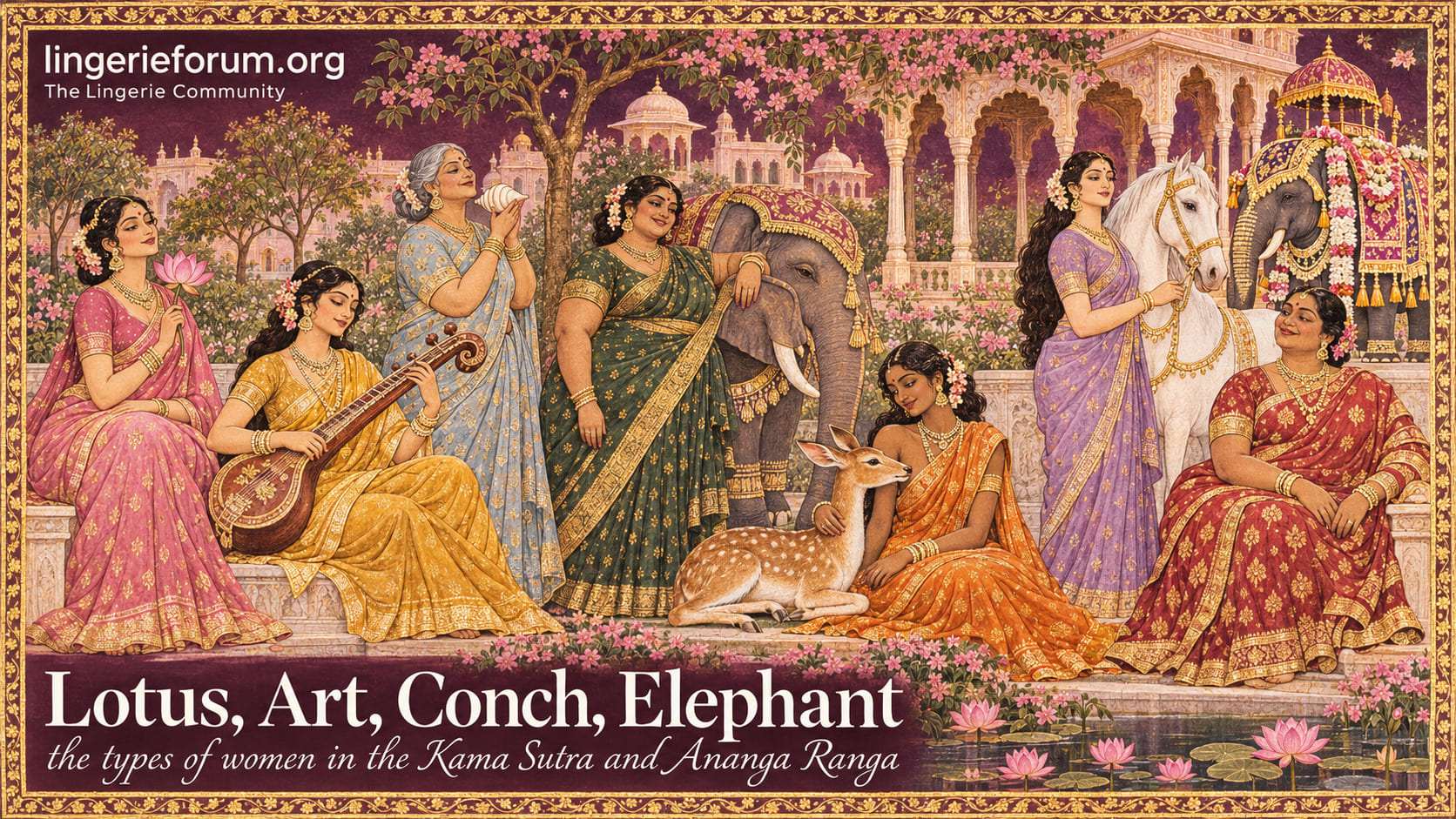
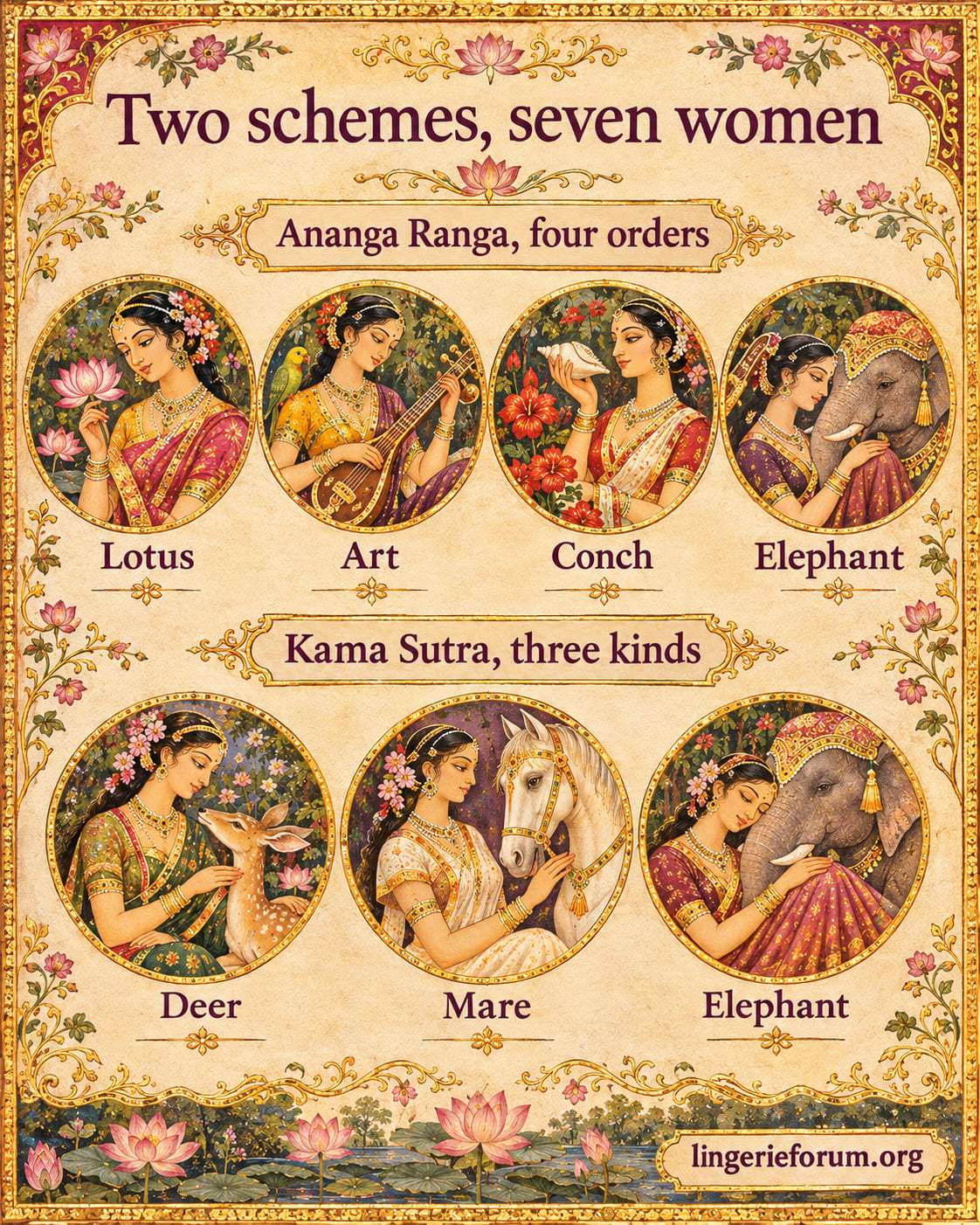
Two classical Indian books sort women into types, and between them they give the oldest and richest folklore of women's bodies and characters there is. The Ananga Ranga describes four orders: the Lotus woman (Padmini), the Art woman (Chitrini), the Conch woman (Shankhini) and the Elephant woman (Hastini). The Kama Sutra describes three kinds by the depth of the yoni, the Deer (Mrigi), the Mare (Vadava) and the Elephant (Karini), and the Ananga Ranga gives each of those a portrait too. Both books say plainly that real women are mixtures.
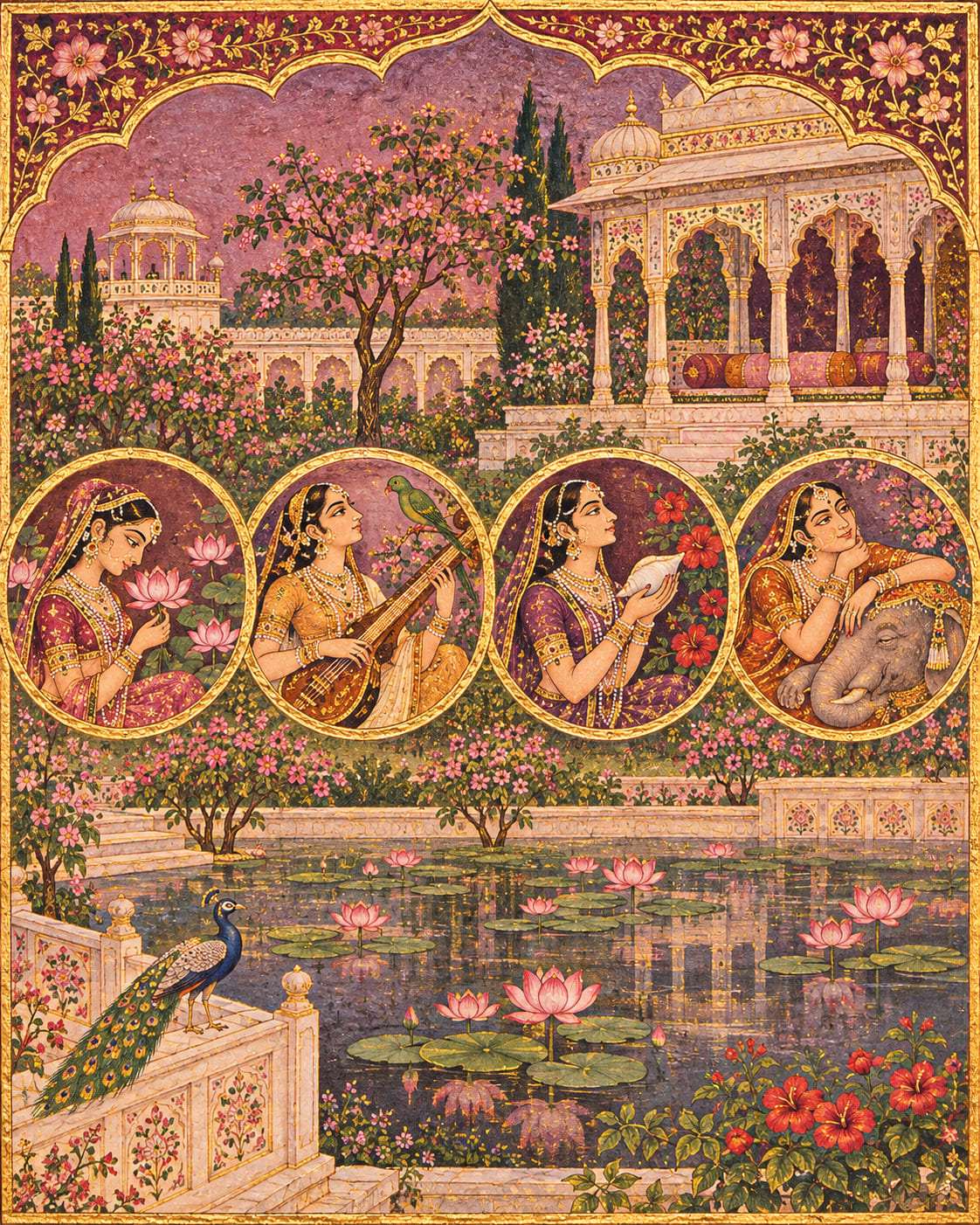
What are the four women of the Ananga Ranga?
- The Lotus woman (Padmini). Moon-faced, swan-footed, fond of white and fine things, happiest in the mornings, with a yoni like "the open lotus-bud".
- The Art woman (Chitrini). Musical, skilled with her hands, playful, fond of her pet birds, with a mons "soft, raised and round".
- The Conch woman (Shankhini). Warm-skinned, low-voiced, quick, dressed in red, and passionate.
- The Elephant woman (Hastini). Full-bodied and unhurried: "the longer the better".
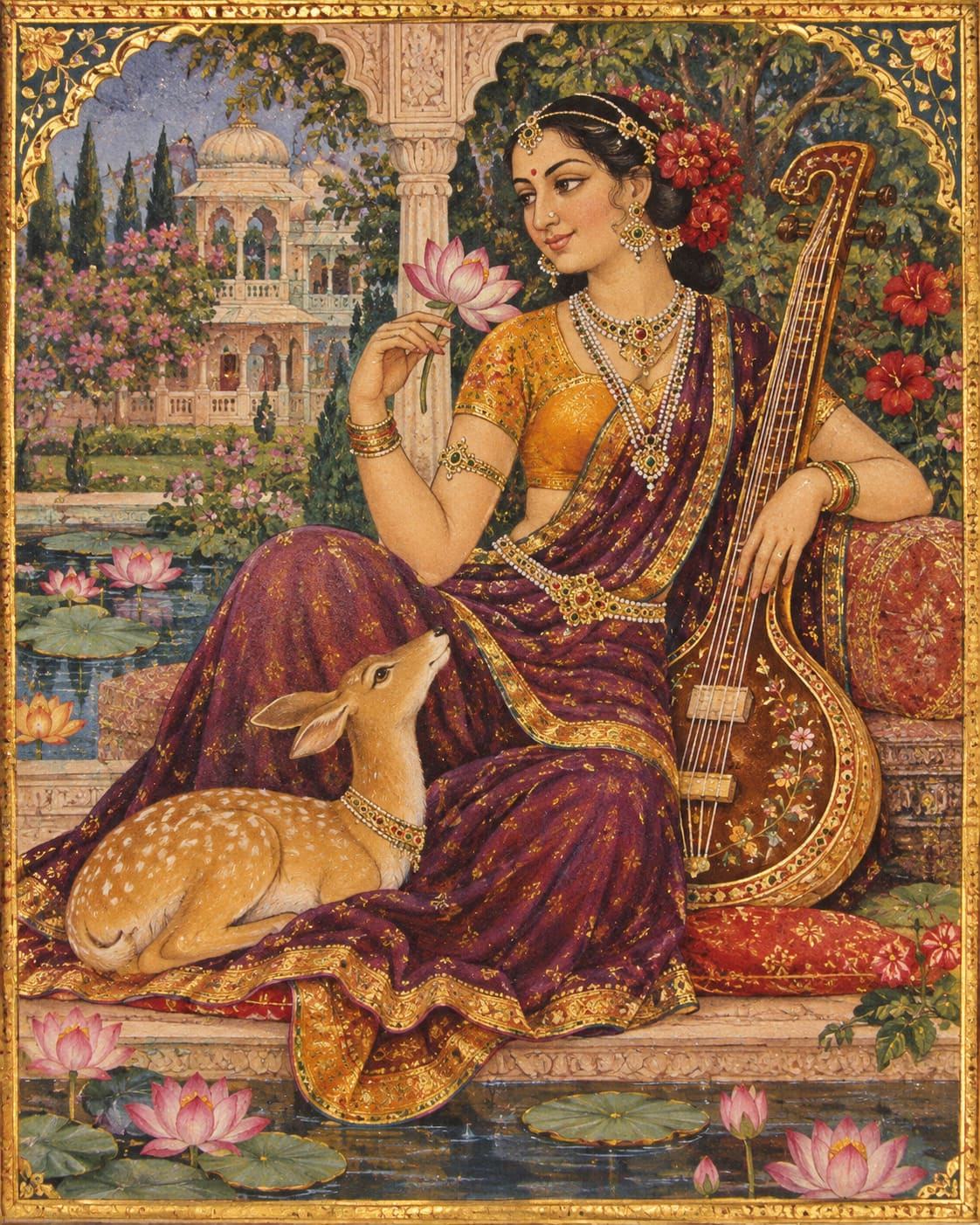
What are the three kinds of woman in the Kama Sutra?
- The Deer woman (Mrigi). Curly-haired, dark-eyed, affectionate, passionate and quick-minded.
- The Mare woman (Vadava). Long-haired, graceful, fond of sleep and good living, devoted.
- The Elephant woman (Karini). Full-bodied, abundant, with big appetites and big passions.
Where do these types come from?
The Kama Sutra was written in Sanskrit by Vatsyayana, around the third century CE. It sorts both sexes into three kinds, the hare, bull and horse man and the deer, mare and elephant woman, in order to match partners well; in the 1883 Burton and Arbuthnot translation of the Kama Sutra, "Woman also, according to the depth of her yoni, is either a female deer, a mare, or a female elephant."
The Ananga Ranga, "the Stage of the Bodiless One", was written in Sanskrit by the poet Kalyana Malla in the fifteenth or sixteenth century, and translated into English by Richard Burton and Forster Fitzgerald Arbuthnot in 1885. It sorts women into four orders, each with her own face, body, voice, yoni, tastes and temperament. All the quotations here come from Richard Burton's 1885 translation of the Ananga Ranga. It takes the Kama Sutra's three kinds as a second, overlapping scheme, and says each of the four orders "may be subdivided into three kinds". So one woman might, in its terms, be an Art woman and a Deer woman at once.
Is anyone just one type?
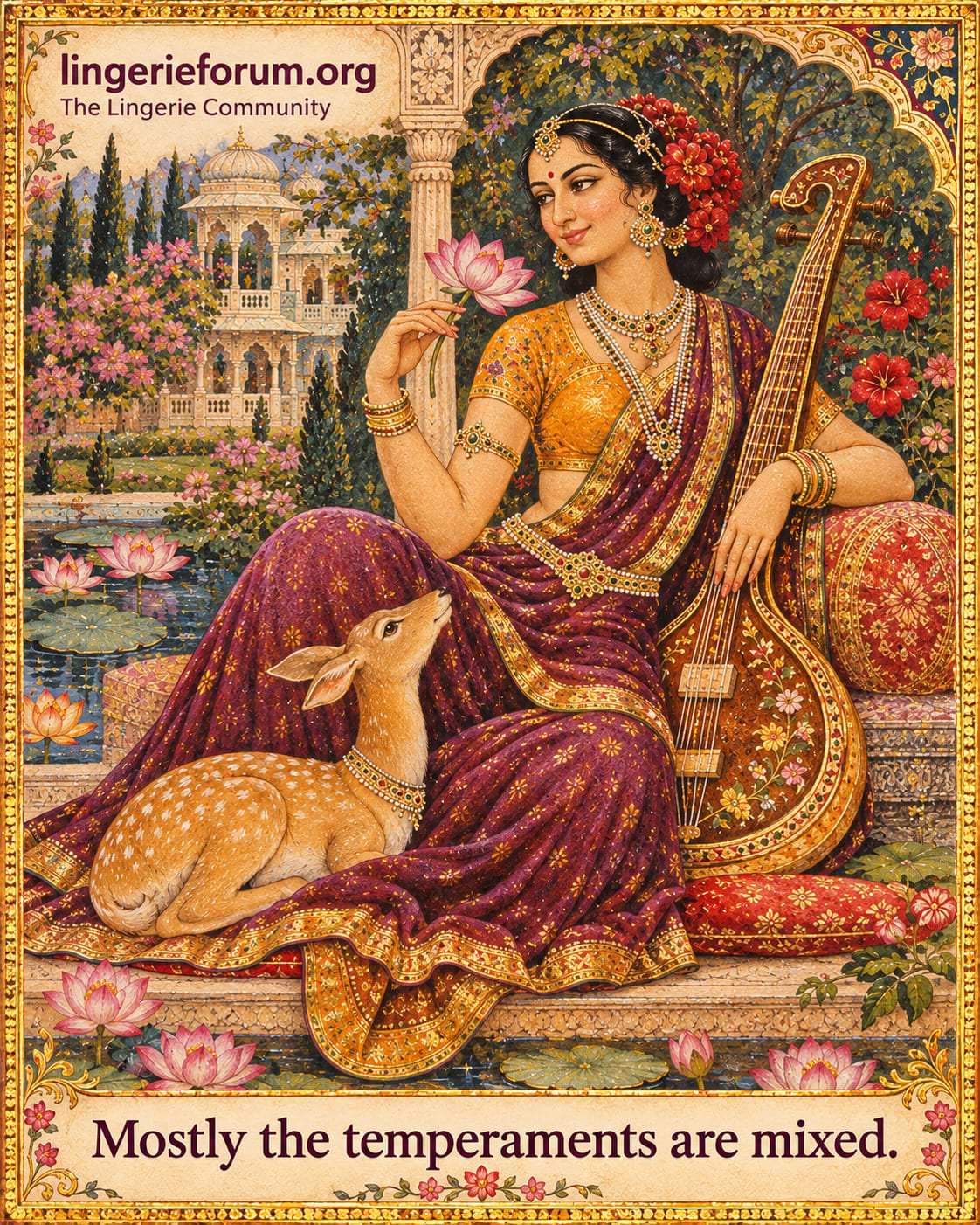
No, and the books say so themselves. The book's own warning is worth keeping close: "Mostly the temperaments are mixed; often we find a combination of two and in some cases even of three," and the types "are seldom found pure". Kalyana Malla never expected any woman to be exactly one of them. That is the best sentence in either book. The types are a vocabulary for admiring differences, not boxes.
What did we leave out?
The Ananga Ranga ranks women. It praises the Lotus and Art women warmly and is harsh about the Conch and both Elephant women, in lines about their tempers, manners and looks that reflect its author's age and prejudices. Our articles keep everything affectionate, sensual and vivid in the portraits, and say plainly each time that something harsher was set aside. We also left out the parts of the book about the lunar calendar and the hours of the day, which are fascinating but belong to a different article.
Is any of this true?
It is poetry and a very old matchmaking scheme, not measurement. Read it for its images: the lotus-bud, the peacock's voice, the elephant in spring. Take whatever describes you, and leave the rest.
How does this fit with the other vulva articles?
These are the oldest types. The newest are five names from 2017, Barbie, Curtain, Horseshoe, Pie and Tulip; see Barbie, Curtain, Horseshoe, Pie, Tulip: The Five Vulva Shapes and Their Stories. The lotus-bud of the Padmini is the direct ancestor of the tulip. And if you came here worried rather than curious, Are My Labia Normal? The Honest Answer is the place to start.
The short version
Four women in the Ananga Ranga, Lotus, Art, Conch and Elephant, and three kinds in the Kama Sutra, Deer, Mare and Elephant: the richest old folklore of women's bodies and characters. Read the kind parts, skip the rankings, and remember the books' own rule: nobody is only one type.
Sources
- the 1883 Burton and Arbuthnot translation of the Kama Sutra - Part II, Chapter I.
- Richard Burton's 1885 translation of the Ananga Ranga - Chapters I and III.
Comments
Loading comments...