The Art Woman (Chitrini): Songs, Pets and Every Accomplishment
In the Ananga Ranga the Chitrini, or Art-woman, is the second of the four women: of middle height, with bee-black hair and a voice like a peacock, she "delights in singing and in every kind of accomplishment" and loves her parrots and birds. Who she is, what the book says about her body and her yoni, and why she may be the most likeable of the four.
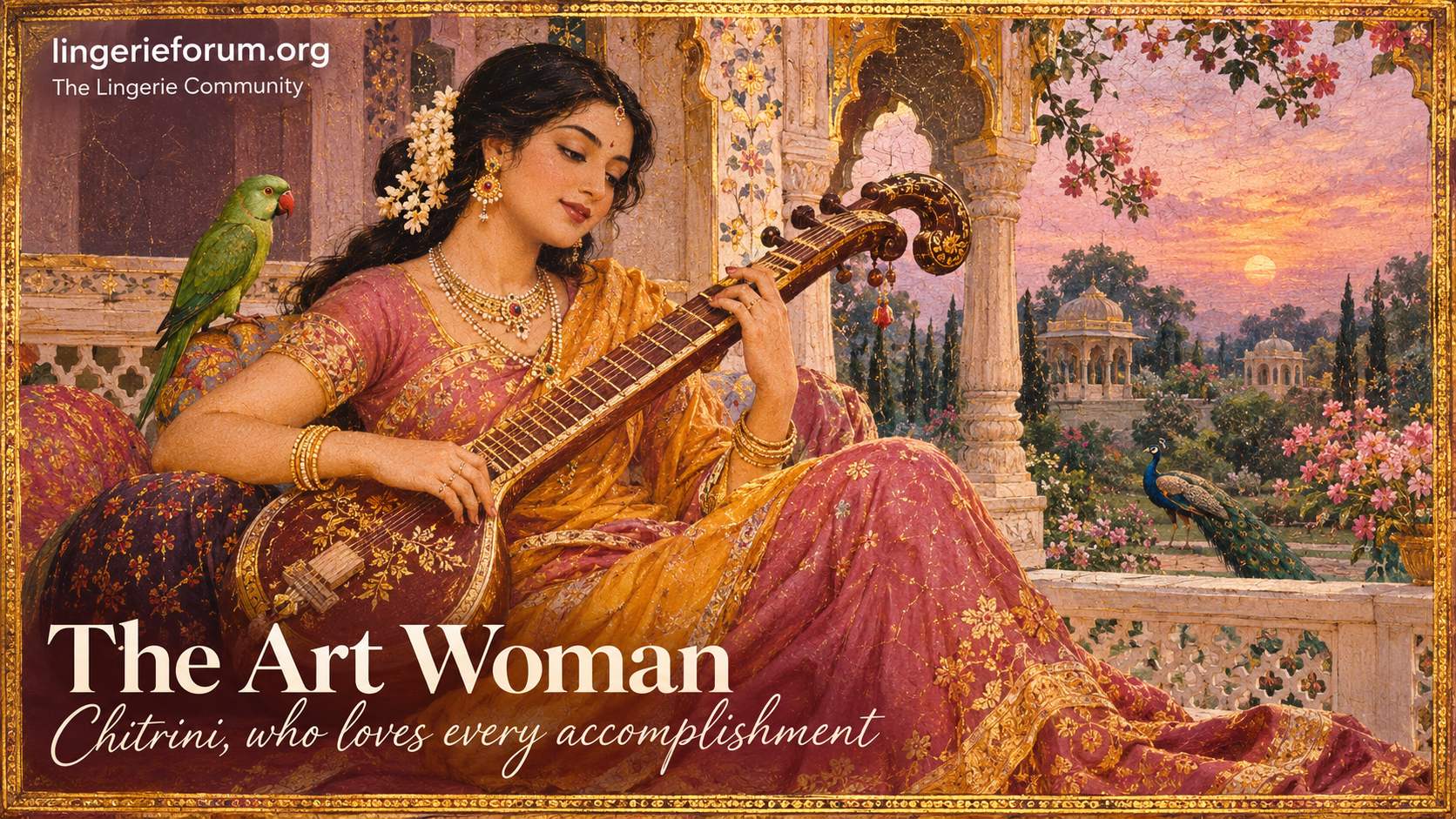
The Chitrini, or Art-woman, is the second of the four orders of women in the Ananga Ranga. She is "of the middle size, neither short nor tall, with bee-black hair", a voice like the peacock's, and a love of singing, crafts and pets. The book says she "delights in singing and in every kind of accomplishment, especially the arts manual", which makes her the artist of the four.
What is the Ananga Ranga?
The Ananga Ranga, "the Stage of the Bodiless One", was written in Sanskrit by the poet Kalyana Malla in the fifteenth or sixteenth century, and translated into English by Richard Burton and Forster Fitzgerald Arbuthnot in 1885. It sorts women into four orders, each with her own face, body, voice, yoni, tastes and temperament. All the quotations here come from Richard Burton's 1885 translation of the Ananga Ranga.
Who is the Art woman?
The book paints her as graceful and well-made: a "thin, round, shell-like neck; tender body; waist lean-girthed as the lion's", "well-turned thighs and heavily made hips". Of her yoni it says "the Mons Veneris being soft, raised and round", and that her love-water "has the perfume of honey". Her "walk is coquettish", and her voice "is that of the peacock", which Burton's footnote explains was high praise, because in India the peacock's cry announces the monsoon rains that bring "joy to the thirsty earth".
What does the book say about her character?
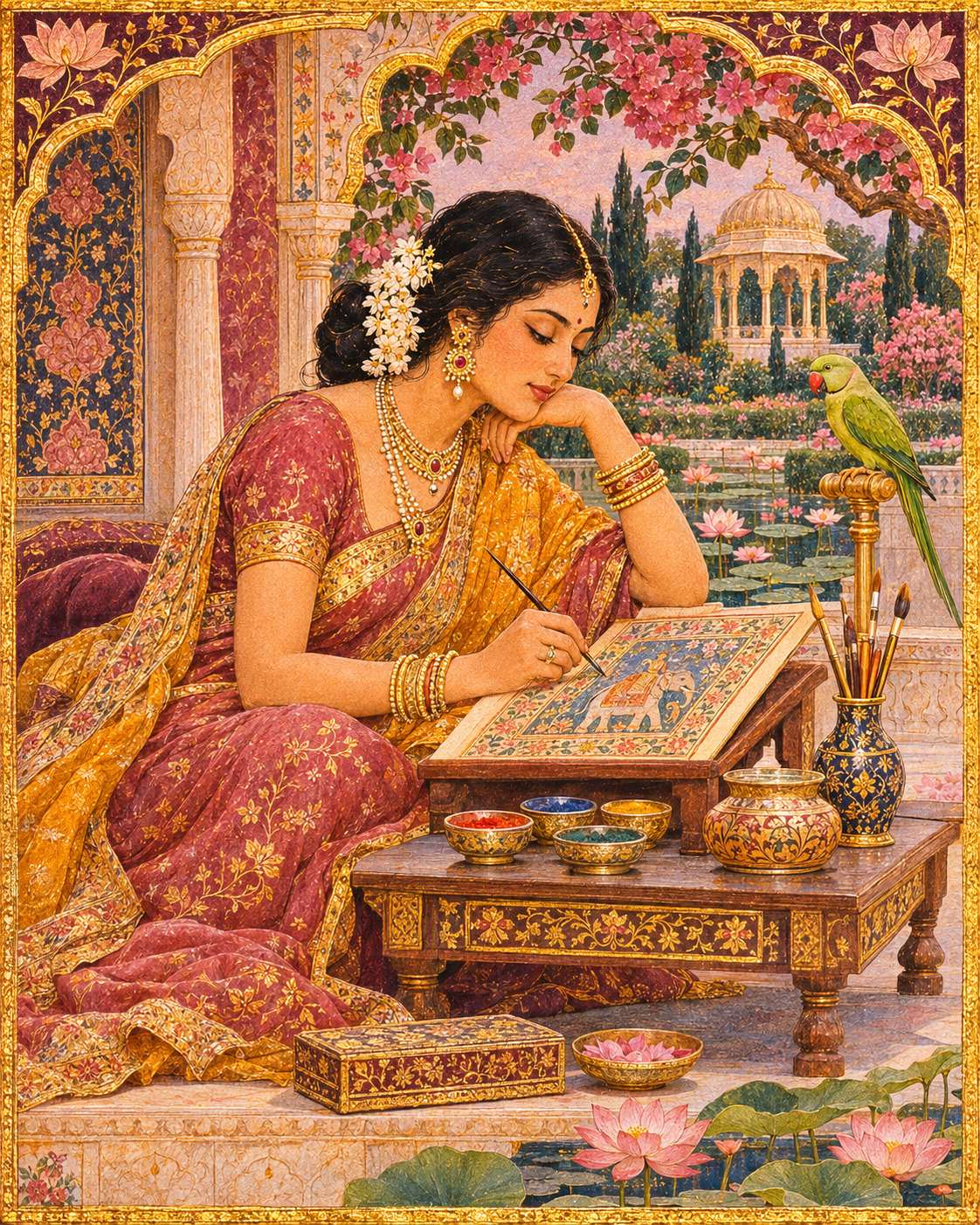
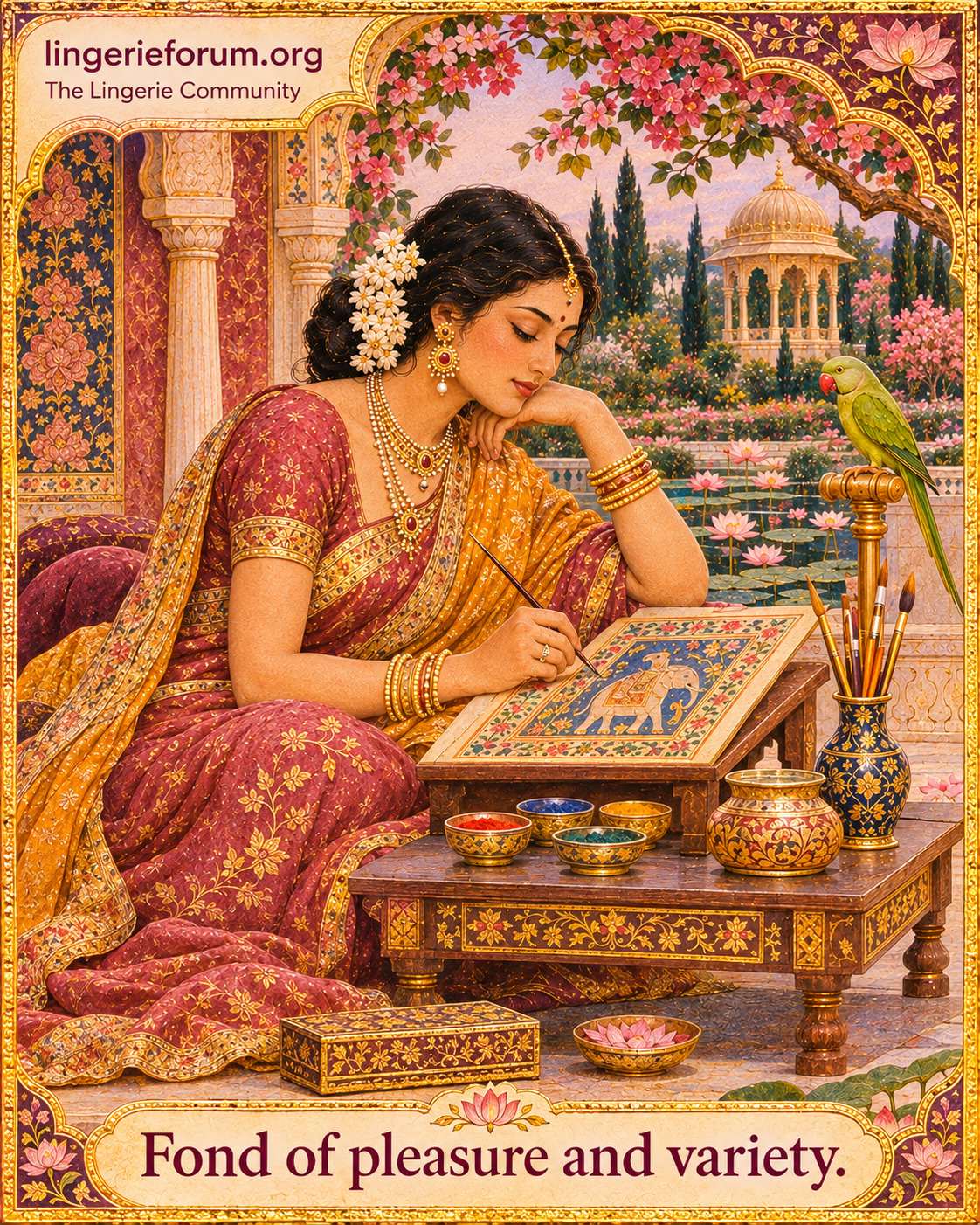
She is "fond of pleasure and variety". She "delights in singing and in every kind of accomplishment, especially the arts manual", in other words, making things with her hands. And she "loves her 'pets', parrots, Mainas and other birds". She is a night person, like the night-lotus that opens to the moon.
It is hard to think of a warmer description in any old book: a woman who sings, makes things, loves her animals and enjoys life's variety.
How do I know if I am an Art woman?
The signs the book gives are about temperament more than measurement: a love of making things, of music, of animals and of variety. If that is you, the Chitrini is yours. The book's own warning is worth keeping close: "Mostly the temperaments are mixed; often we find a combination of two and in some cases even of three," and the types "are seldom found pure". Kalyana Malla never expected any woman to be exactly one of them.
What does the folklore say about the Art woman?
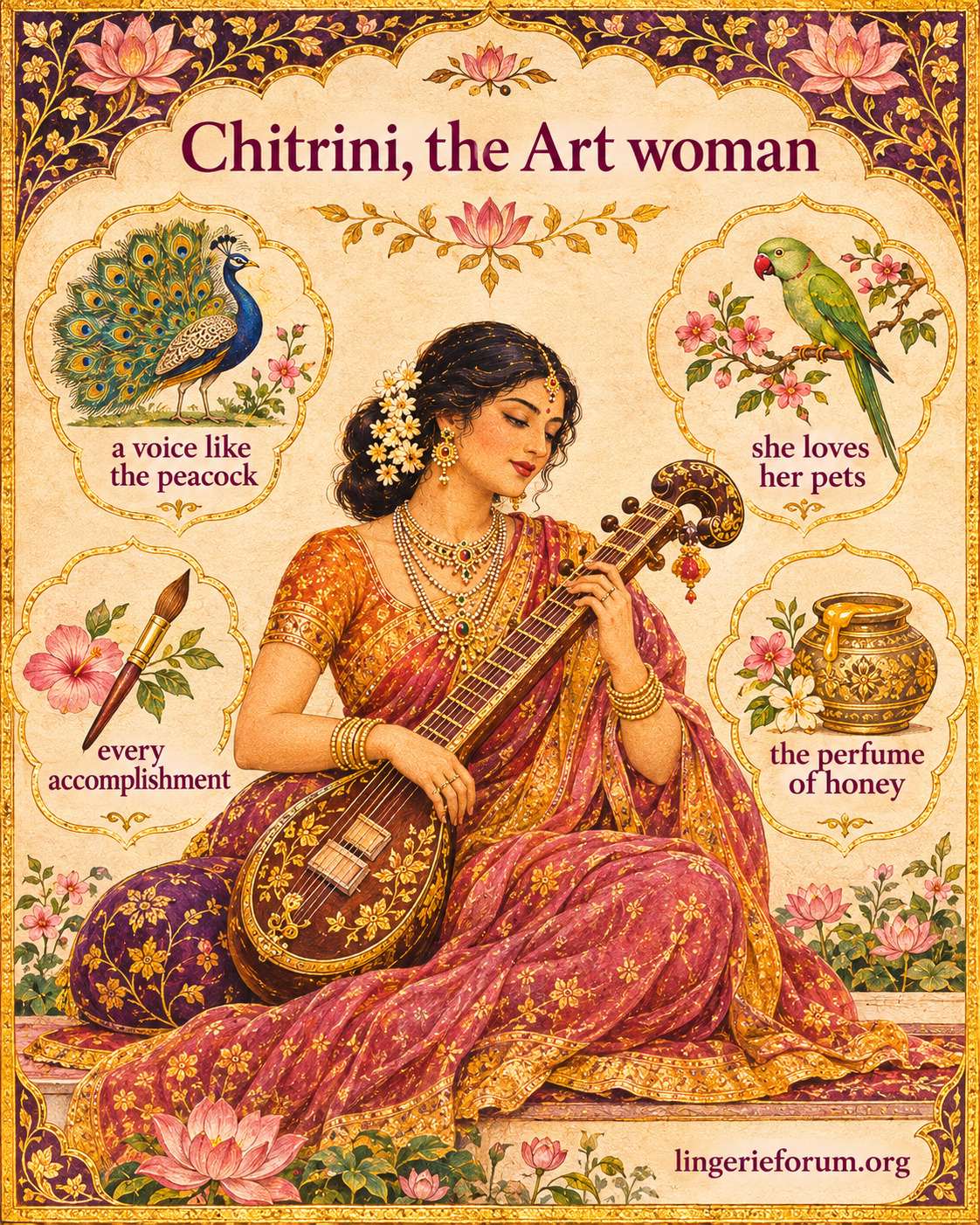
What the folklore says. In the Ananga Ranga the Chitrini is the creative one: musical, skilled with her hands, playful, fond of her birds, with a voice that sounds like the coming rain. Burton's notes match her to the "sanguine temperament" of European tradition, the cheerful and sociable one. Her description is almost entirely affectionate, and her "soft, raised and round" mons gives the modern pie shape its oldest compliment; see Barbie, Curtain, Horseshoe, Pie, Tulip: The Five Vulva Shapes and Their Stories.
Is any of this true?
It is poetry, not measurement: one fifteenth-century author's way of admiring and sorting women, shaped by his time. Read it the way you would read an old love poem, for its images and its delight, and take from it whatever describes you. Nothing in it is a verdict, and its author said himself that nobody fits one type.
The short version
The second of four women: middle height, black hair, a peacock's voice, a soft, rounded mons, honeyed perfume, and a love of songs, crafts, variety and pet birds. The artist of the four.
Sources
- Richard Burton's 1885 translation of the Ananga Ranga - Chapter I, Sections II and IV.
Comments
Loading comments...