The Mare Woman (Vadava): Graceful, Easy-Living and Devoted
The second of the Kama Sutra's three kinds of woman is the mare, Vadava or Ashvini. The Ananga Ranga paints her with long straight hair, eyes "like the petals of the dark lotus", a graceful walk, a love of sleep and good living, and a heart "affectionate to her husband". Where she comes from and what the old books say about her.
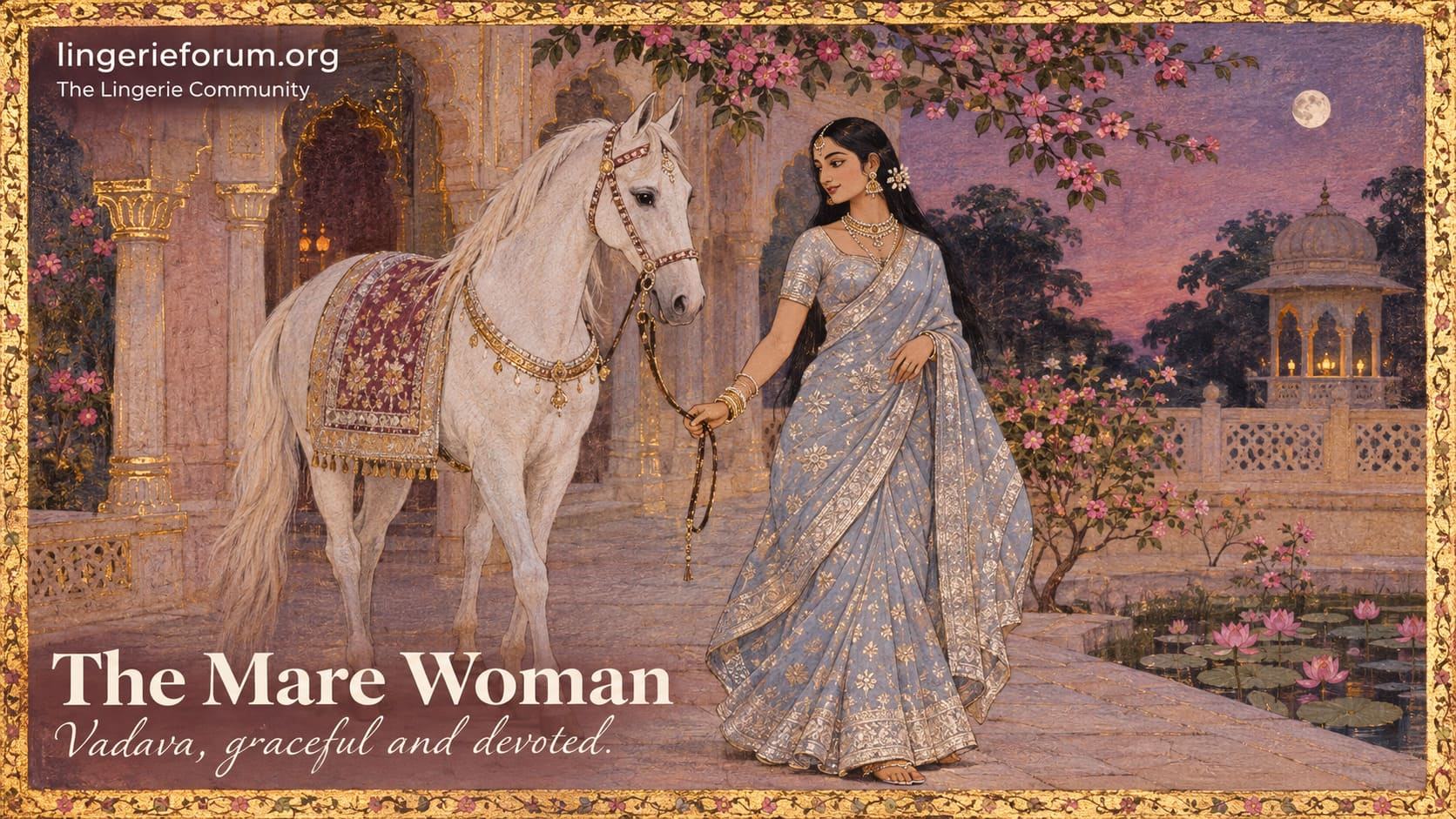
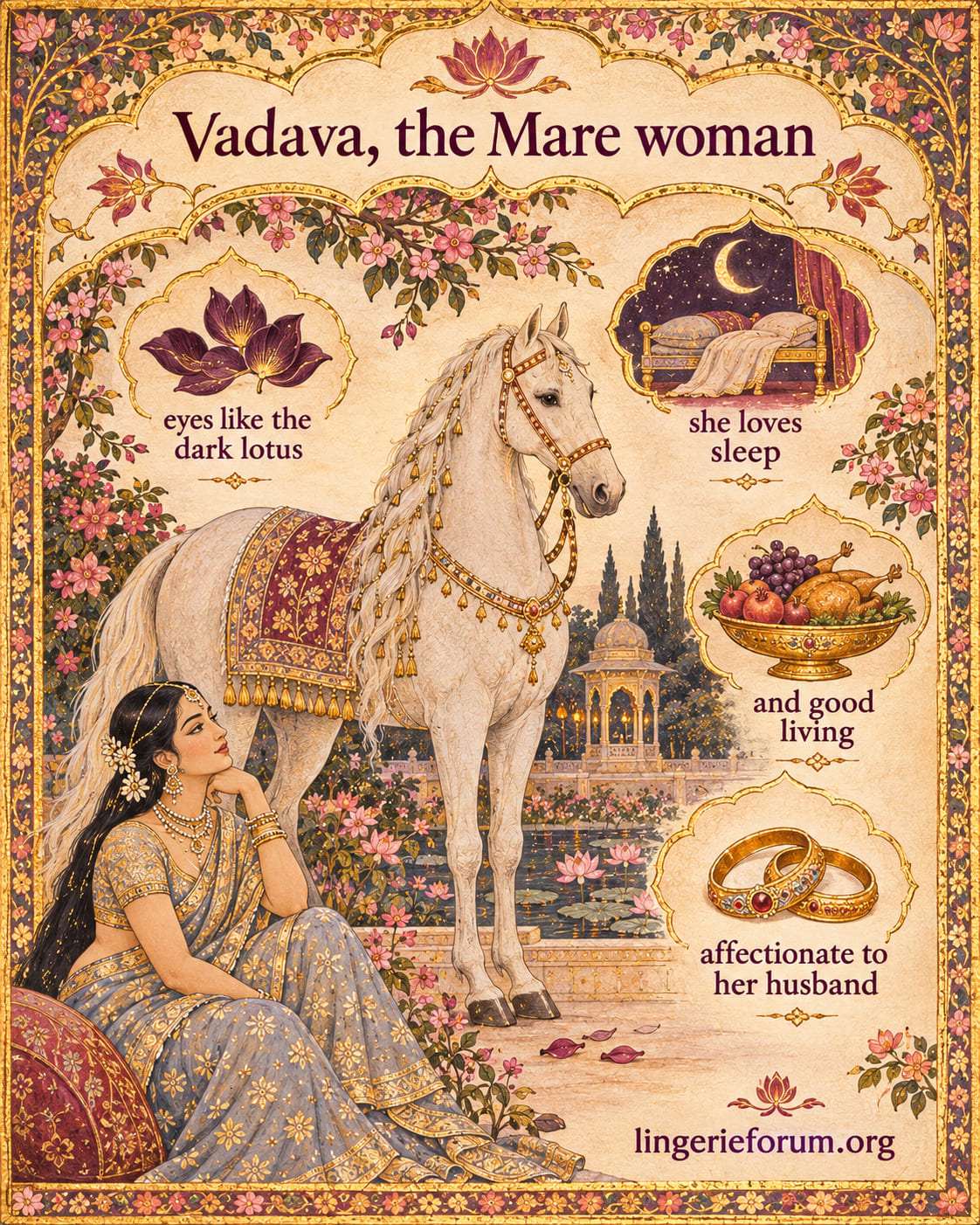
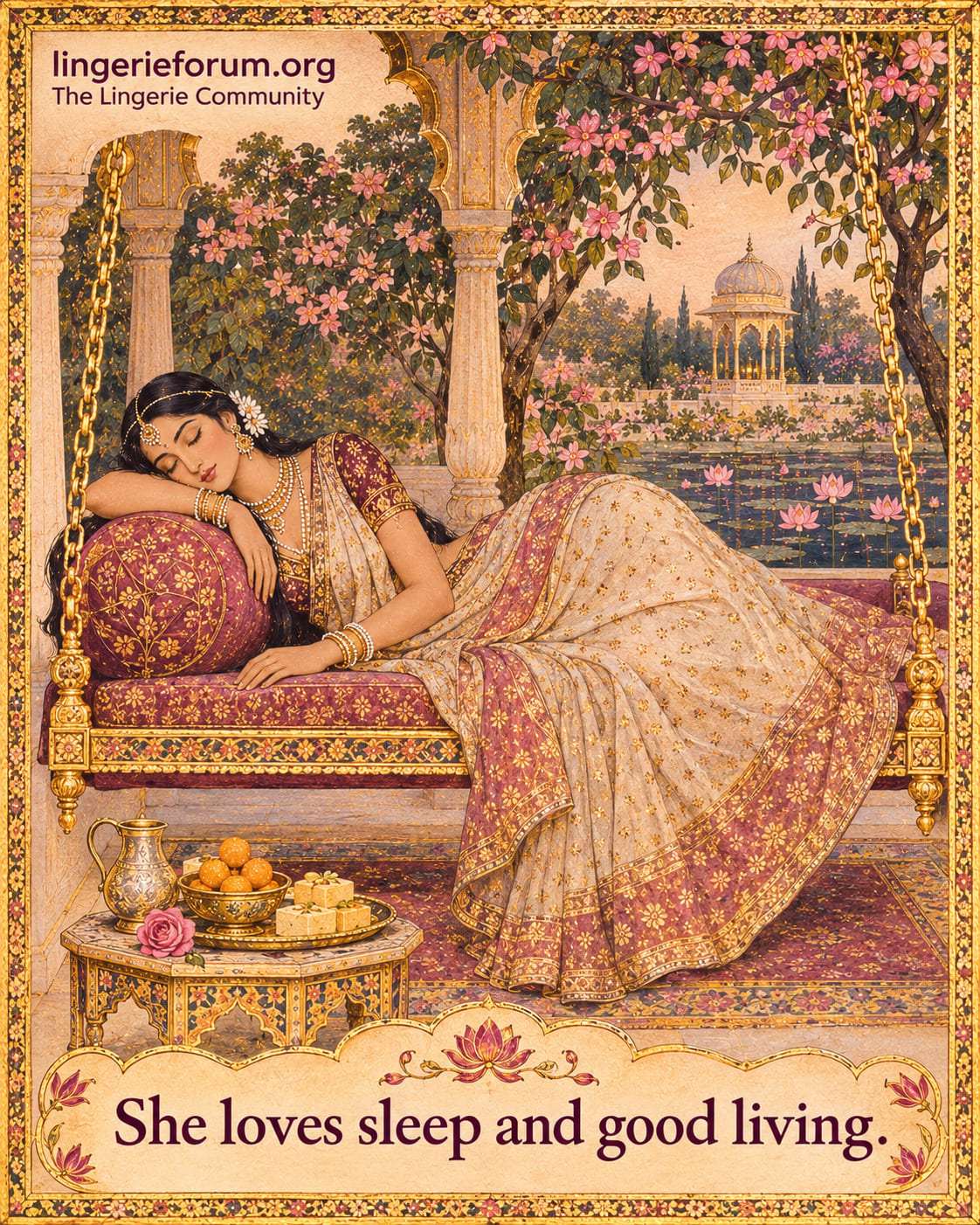
The Mare woman, Vadava or Ashvini in Sanskrit, is the second of the Kama Sutra's three kinds of woman, between the deer and the elephant. The Ananga Ranga gives her a portrait: long straight hair, eyes "like the petals of the dark lotus", broad hips, a "graceful walk", a love of "sleep and good living", and a heart that is "affectionate to her husband". She is the easy-living, devoted one.
Where does the Mare woman come from?
From the Kama Sutra of Vatsyayana, around the third century CE, which sorts women "according to the depth of her yoni" into "a female deer, a mare, or a female elephant", in the 1883 Burton and Arbuthnot translation of the Kama Sutra. The mare is the middle kind, and the Kama Sutra's natural match for her is the bull man.
The Ananga Ranga, many centuries later, turned the three kinds into portraits. In Richard Burton's 1885 translation of the Ananga Ranga, the mare "numbers nine fingers depth", the middle of the three.
What does the book say about her?
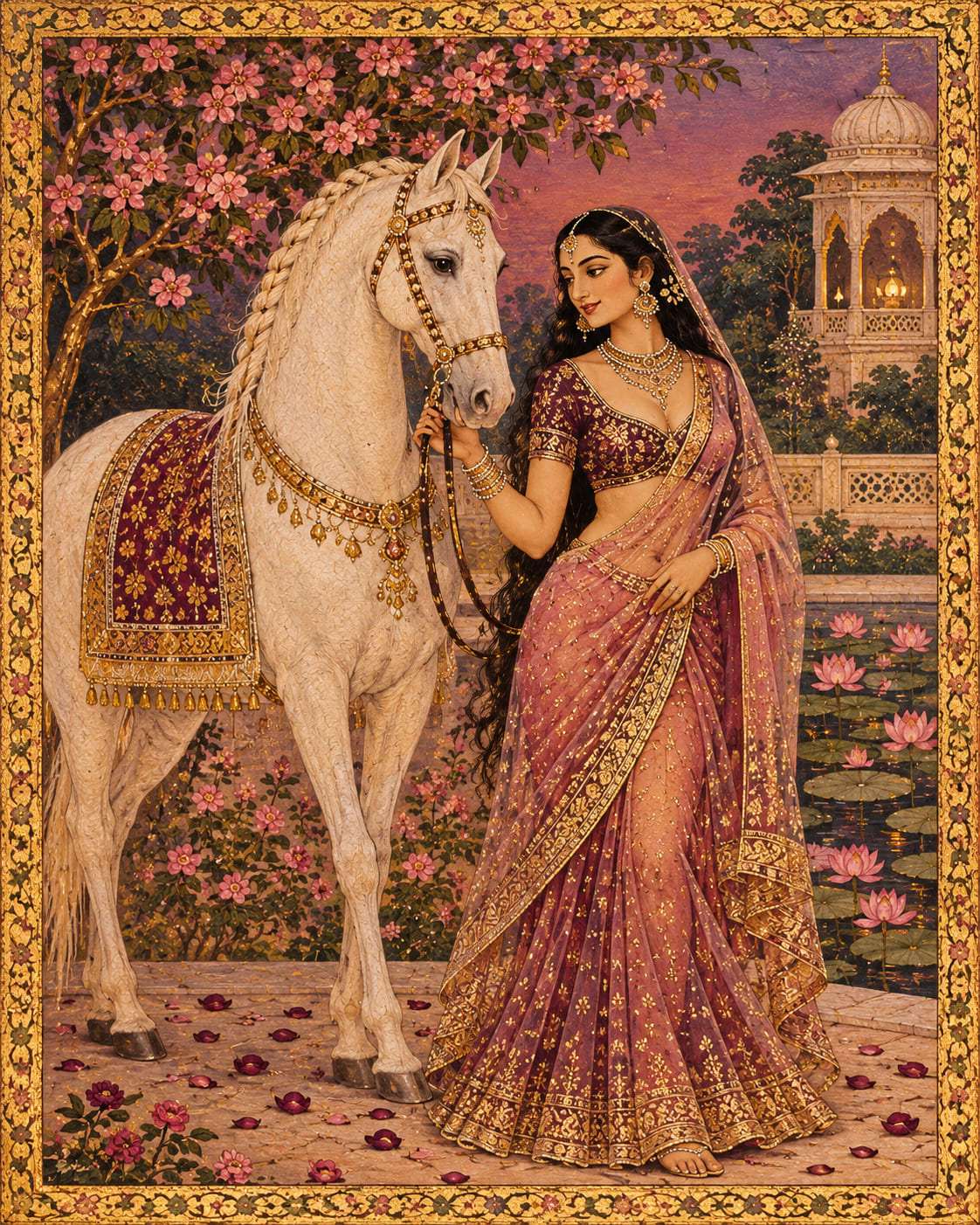
"Her body is delicate; her arms are thick from the shoulders downwards; her breasts and hips are broad and fleshy". "Her hands and feet are red like flowers, and well-proportioned." Her head "is covered with long and straight hair"; her "neck is long"; "her throat, eyes, and mouth are broad, and her eyes are like the petals of the dark lotus". "Her Kama-salila is perfumed like the lotus."
What does the book say about her character?
"She has a graceful walk, and she loves sleep and good living. Though choleric and versatile, she is affectionate to her husband; she does not easily arrive at the venereal spasm". Read today: graceful, fond of comfort and rest, spirited and adaptable, loyal, and not to be hurried in love.
How do I know if I am a Mare woman?
If you love your sleep, your comforts and the people you love, and you like to take your time, the mare may be yours. The book's own warning is worth keeping close: "Mostly the temperaments are mixed; often we find a combination of two and in some cases even of three," and the types "are seldom found pure". Kalyana Malla never expected any woman to be exactly one of them.
What does the folklore say about the Mare woman?
What the folklore says. In the Kama Sutra the mare is the middle of three kinds of woman, the natural partner of the bull man. In the Ananga Ranga she is graceful, long-haired, lotus-eyed and lotus-scented, a lover of sleep and good living, spirited, adaptable, and devoted to the one she loves. The horse, in Indian tradition, stands for energy and freedom; the mare's portrait is that energy at rest.
Is any of this true?
It is a classical scheme, not a measurement: the Kama Sutra's authors were matching partners, not describing bodies with any precision, and the depths given in "fingers" belong to that scheme. Read it as a very old way of saying that people are different and should find the fit that suits them, which is still good advice.
The short version
The middle of the Kama Sutra's three kinds of woman, matched with the bull man. The Ananga Ranga paints her long-haired, lotus-eyed and graceful, fond of sleep and comfort, spirited, adaptable and devoted.
Sources
- the 1883 Burton and Arbuthnot translation of the Kama Sutra - Part II, Chapter I.
- Richard Burton's 1885 translation of the Ananga Ranga - Chapter III, Section II.
Comments
Loading comments...