The Elephant Woman (Karini): The Kama Sutra's Third Type
The third of the Kama Sutra's three kinds of woman is the female elephant, Karini, the deepest of the three and the natural match for the horse man. What the Kama Sutra says, what the Ananga Ranga's portrait keeps once its harsher lines are set aside (big appetites, passion, abundance), and why the elephant is a compliment in Indian tradition.
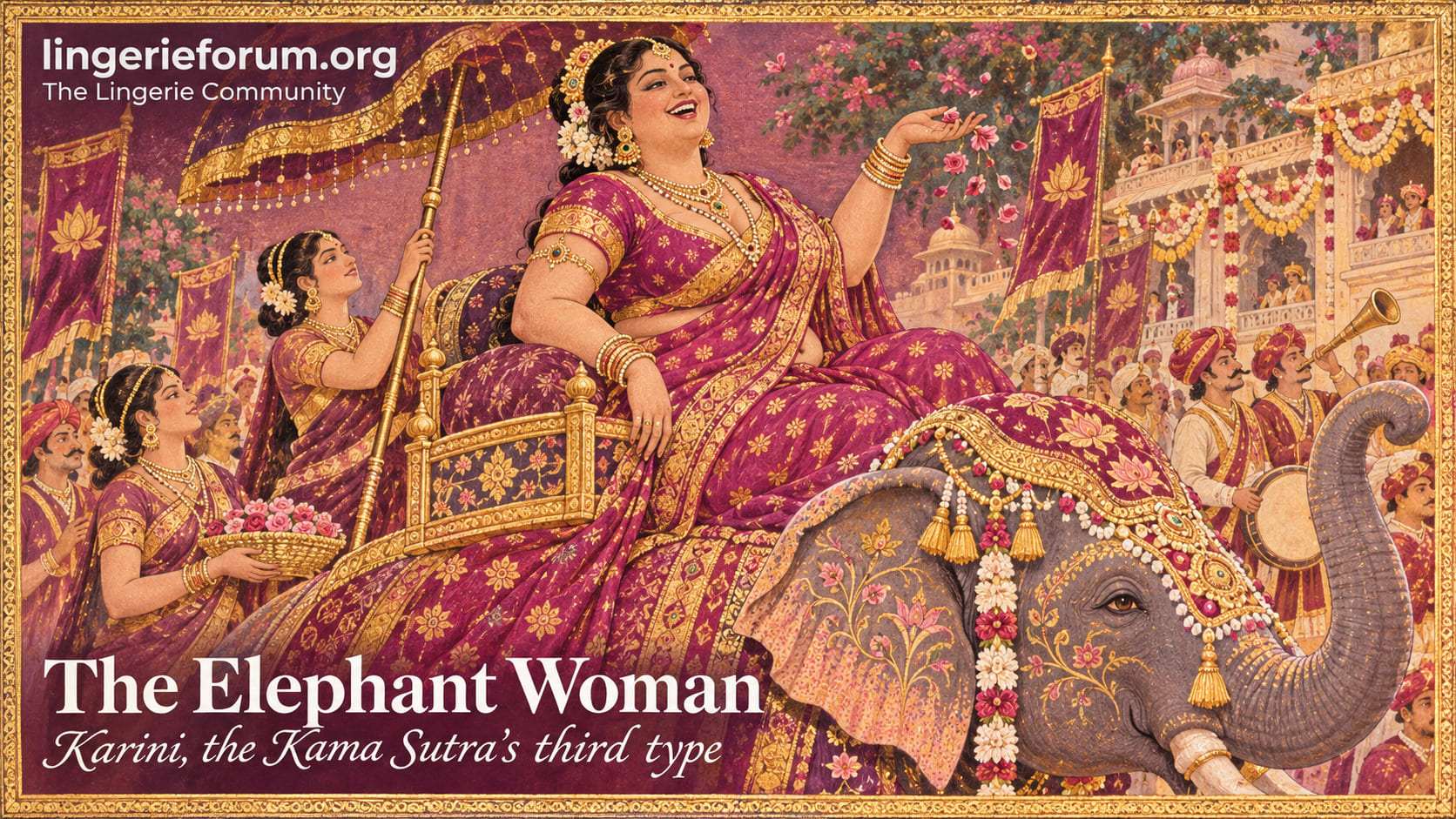
The Elephant woman, Karini in Sanskrit, is the third of the Kama Sutra's three kinds of woman, the deepest of the three and the natural match for the horse man. It is a different figure from the Hastini, the Ananga Ranga's fourth order of women, though both are named after the elephant; the old books keep two separate schemes side by side. Karini is the woman of big appetites and big passions.
Where does the Elephant woman come from?
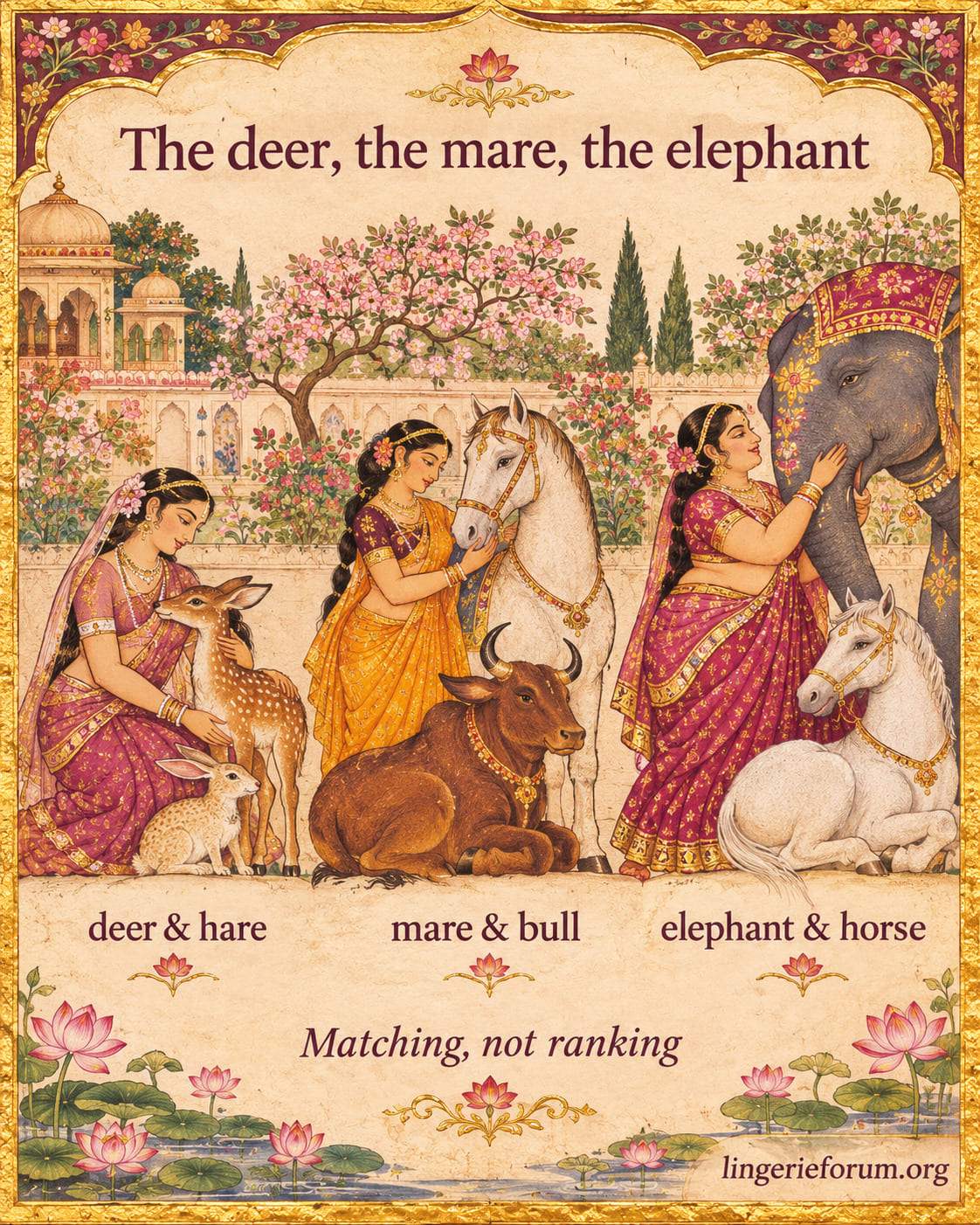
From the Kama Sutra of Vatsyayana, around the third century CE, which divides women "according to the depth of her yoni" into "a female deer, a mare, or a female elephant", in the 1883 Burton and Arbuthnot translation of the Kama Sutra. The elephant is the third, and the Kama Sutra's "equal union" pairs her with the horse man. Its whole scheme is about matching partners: a deer with a hare, a mare with a bull, an elephant with a horse.
The Ananga Ranga later gave her a portrait. In Richard Burton's 1885 translation of the Ananga Ranga, the Karini "has a Yoni twelve fingers in depth", the deepest of the three.
What does the book say about her?
She has "large breasts", a "broad" face, "thick" hair, and hands, feet and arms that are "short and fat". Her love-water "is very abundant, and it suggests the juice which flows from the elephant's temples", the musth of the elephant in spring, which Indian poetry uses as the image of passion itself.
What does the book say about her character?
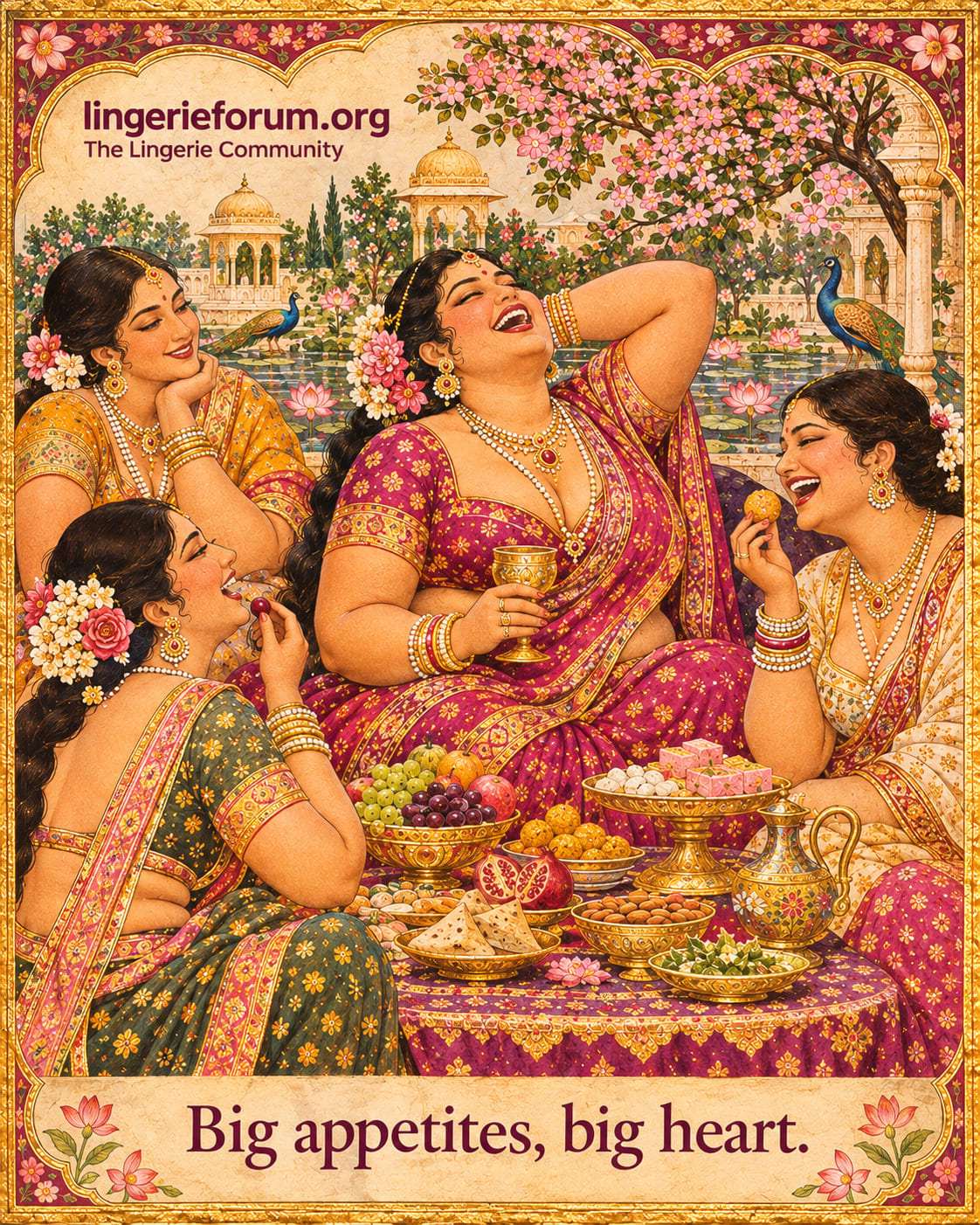
The kindest reading of the Ananga Ranga is this: she is a woman of large appetites, at the table and in love. "Excited and disquieted by carnal desires, she is not easily satisfied, and requires congress unusually protracted." She is abundant in every sense.
What did we leave out?
Most of the rest. Kalyana Malla is harsher about the Karini than about anyone else in his book, in words about her looks, her manners and her morals that we will not repeat. What remains, read today, is a full-bodied woman with a big appetite for life and for love. Every age has had women like that, and every age has been lucky to.
How do I know if I am an Elephant woman?
If you have big appetites, for food, for pleasure, for life, and little patience for anything half-hearted, the elephant is yours. The book's own warning is worth keeping close: "Mostly the temperaments are mixed; often we find a combination of two and in some cases even of three," and the types "are seldom found pure". Kalyana Malla never expected any woman to be exactly one of them.
What does the folklore say about the Elephant woman?
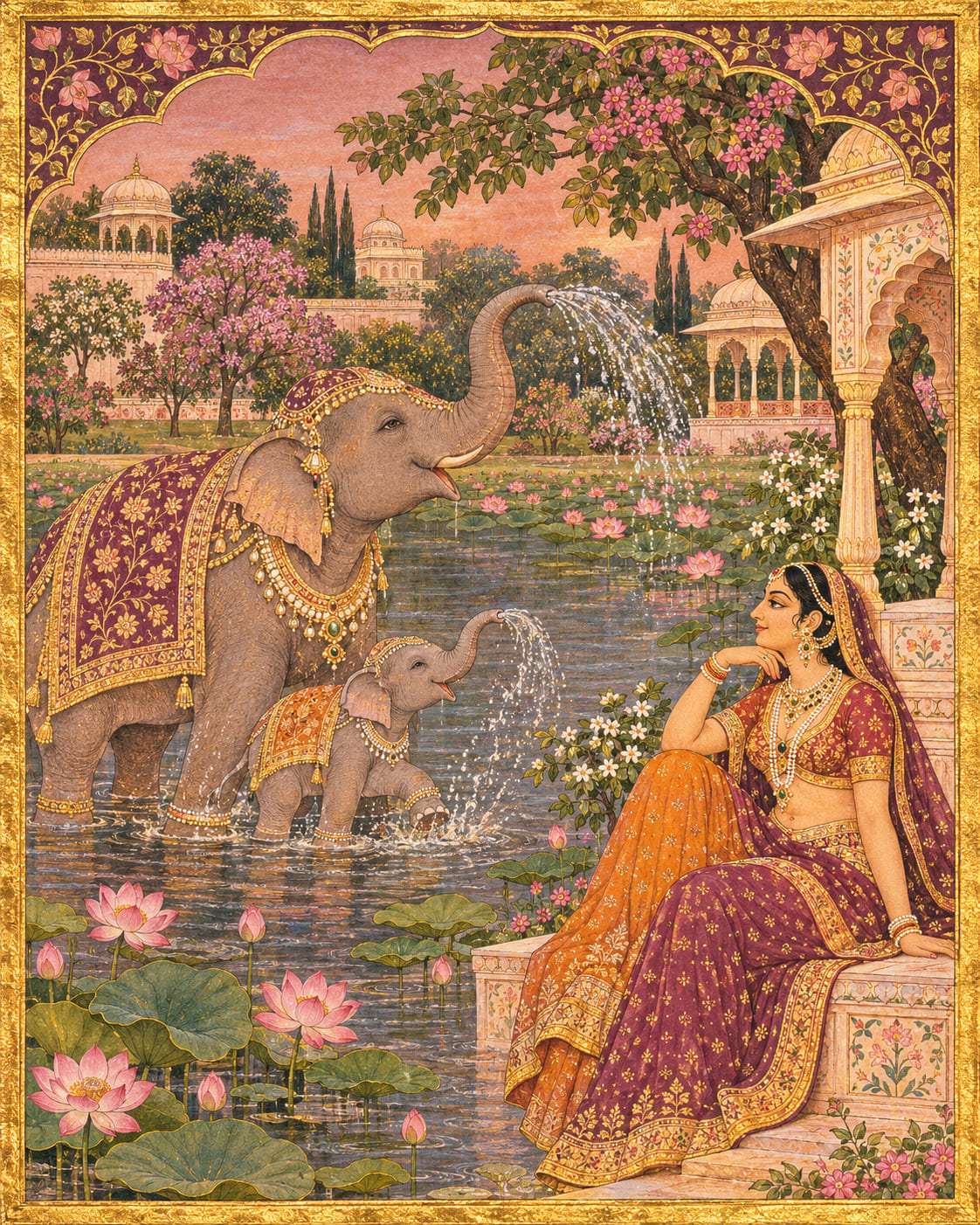
What the folklore says. In the Kama Sutra the female elephant is the third kind of woman, the match for the horse man, and the scheme is about fit, not rank. In the Ananga Ranga she is full-bodied, abundant and passionate, scented like the elephant in spring. And in Indian tradition the elephant itself is Ganesha's form, the mount of kings and gods, and an emblem of strength and good fortune.
Is any of this true?
It is a classical scheme, not a measurement: the Kama Sutra's authors were matching partners, not describing bodies with any precision, and the depths given in "fingers" belong to that scheme. Read it as a very old way of saying that people are different and should find the fit that suits them, which is still good advice.
The short version
The third of the Kama Sutra's three kinds of woman, matched with the horse man. The Ananga Ranga's portrait, once its harsh lines are set aside, is a full-bodied woman with big appetites and big passions, named after a revered animal.
Sources
- the 1883 Burton and Arbuthnot translation of the Kama Sutra - Part II, Chapter I.
- Richard Burton's 1885 translation of the Ananga Ranga - Chapter III, Section II.
Comments
Loading comments...