The Conch Woman (Shankhini): Red Flowers and Real Passion
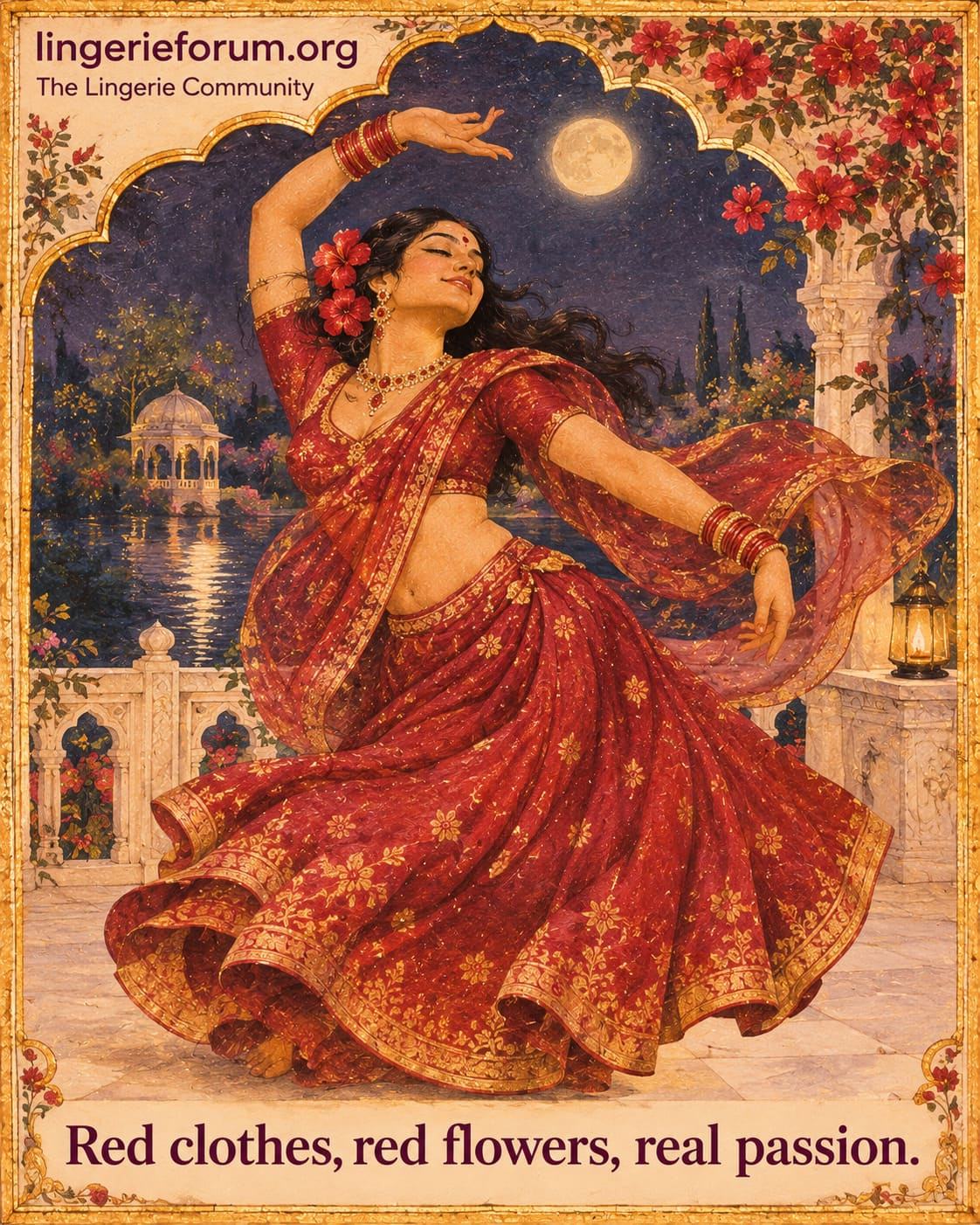
In the Ananga Ranga, the Shankhini or Conch-woman is the third of the four women: warm-skinned, deep-voiced, quick on her feet, in love with red clothes, red flowers and red ornaments, and given to "fits of amorous passion". Who she is in the book, what we kept and what we left out, and why her description reads today like a woman who simply knows what she wants.
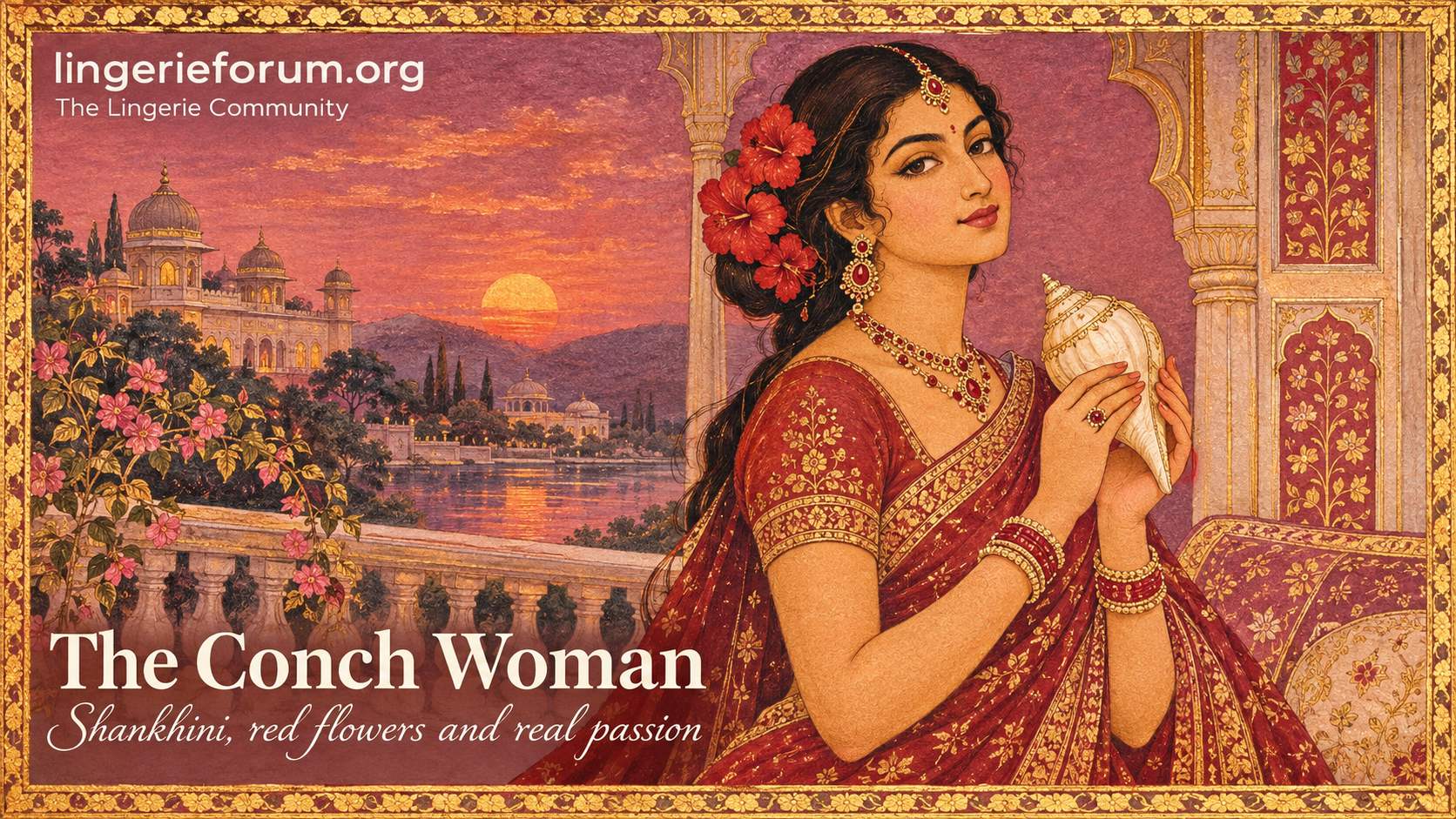
The Shankhini, or Conch-woman, is the third of the four orders of women in the Ananga Ranga. The book gives her warm "tawny, or dark yellow-brown" skin, long slender hands and feet, a deep, low voice, a quick step, and a love of everything red: "she delights in clothes, flowers and ornaments of red colour". She is the passionate one of the four.
What is the Ananga Ranga?
The Ananga Ranga, "the Stage of the Bodiless One", was written in Sanskrit by the poet Kalyana Malla in the fifteenth or sixteenth century, and translated into English by Richard Burton and Forster Fitzgerald Arbuthnot in 1885. It sorts women into four orders, each with her own face, body, voice, yoni, tastes and temperament. All the quotations here come from Richard Burton's 1885 translation of the Ananga Ranga.
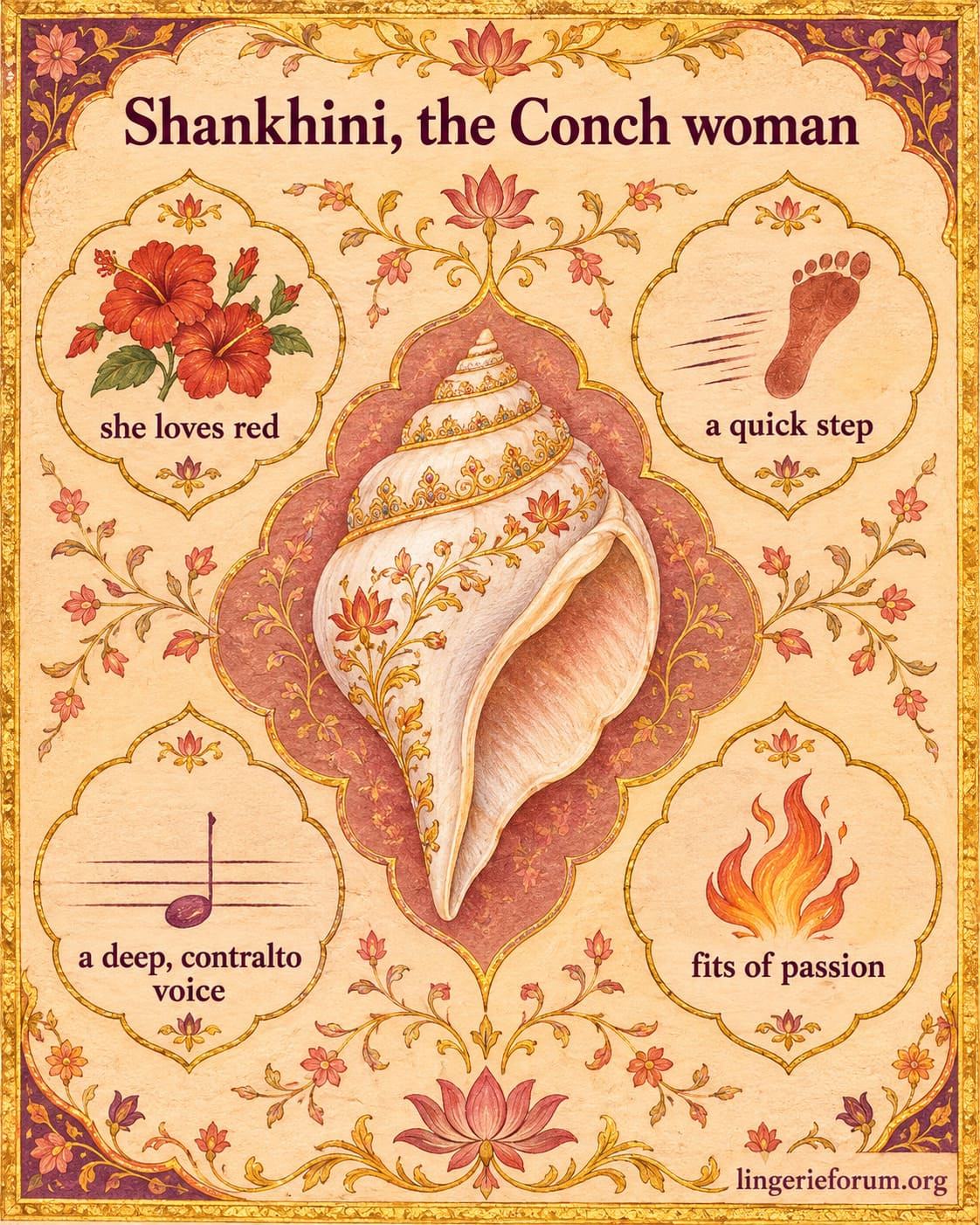
Who is the Conch woman?
Her name comes from the shankha, the conch shell, one of the sacred emblems carried by the god Vishnu. The book describes her "head, hands, and feet" as "thin and long", her voice as "of the bass or contralto type", and her gait as "precipitate", meaning quick. "She eats with moderation." Of her yoni it says it is "ever moist". Burton's notes pair her with the "bilious temperament" of European tradition, the fiery one.
What does the book say about her character?
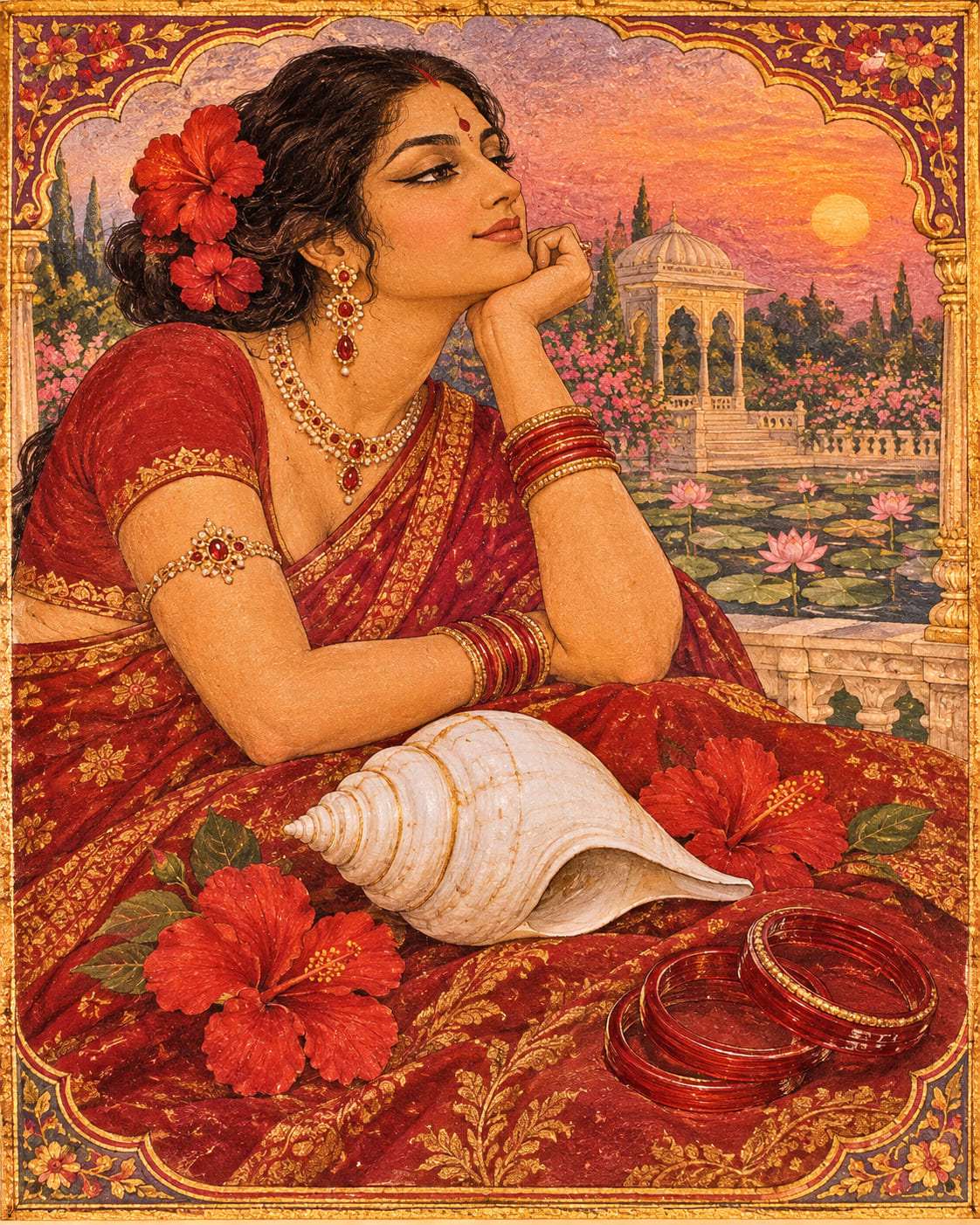
The Shankhini "is subject to fits of amorous passion", and in love she holds nothing back: "at the moment of enjoyment, she thrusts her nails into her husband's flesh". She loves red, the colour of passion and celebration in Indian tradition. Like the Art woman, she is a night person, opening like the night-lotus to the moon.
What did we leave out?
Honestly, some of it. Kalyana Malla is unkind about the Conch woman's temper, in words we are not going to repeat, and his description of her looks reflects the colour prejudices of his time. What remains, read today, is a woman with a low voice and a quick step, who dresses in red, knows what she wants and loves with her whole body. That is not a flaw.
How do I know if I am a Conch woman?
If you love red, move quickly, speak low and love fiercely, the conch is yours. The book's own warning is worth keeping close: "Mostly the temperaments are mixed; often we find a combination of two and in some cases even of three," and the types "are seldom found pure". Kalyana Malla never expected any woman to be exactly one of them.
What does the folklore say about the Conch woman?
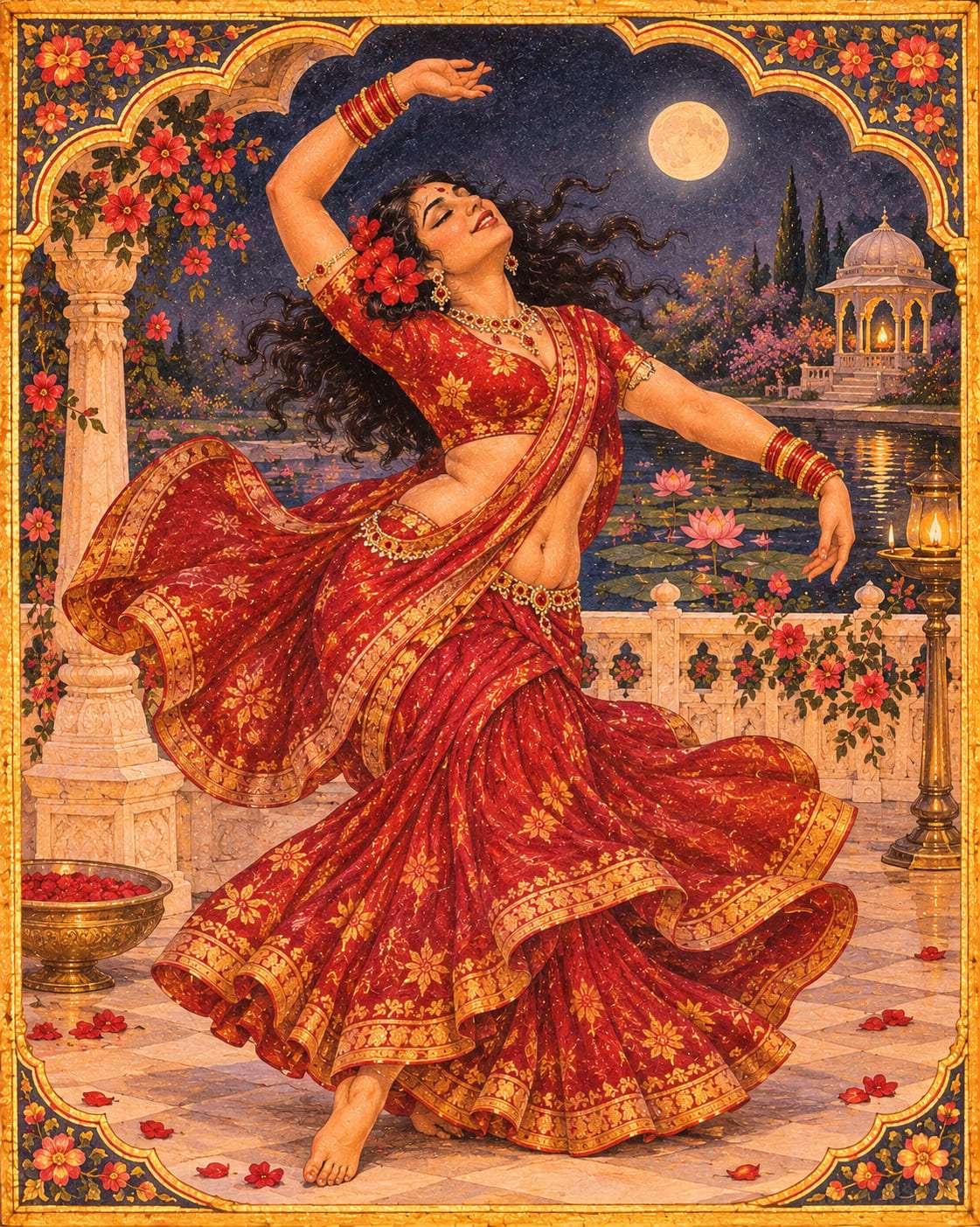
What the folklore says. In the Ananga Ranga the Shankhini is the woman of fire: warm-skinned, quick, deep-voiced, dressed in red and passionate in love. Her emblem, the conch, is blown in Indian temples to begin worship and to announce something important. It is a good emblem for a woman who does not whisper.
Is any of this true?
It is poetry, not measurement: one fifteenth-century author's way of admiring and sorting women, shaped by his time. Read it the way you would read an old love poem, for its images and its delight, and take from it whatever describes you. Nothing in it is a verdict, and its author said himself that nobody fits one type.
The short version
The third of four women: warm skin, long hands, a low voice, a quick step, a love of red, and real passion. The book is harsh about her temper and we left that out; what is left is a woman who knows exactly what she wants.
Sources
- Richard Burton's 1885 translation of the Ananga Ranga - Chapter I, Sections I, II and IV.
Comments
Loading comments...