The Lotus Woman (Padmini): The First of the Four Women
In the Ananga Ranga, a fifteenth- or sixteenth-century Indian love manual, the Padmini or Lotus-woman comes first: a face like the full moon, a voice like the kokila bird, and a yoni that "resembles the open lotus-bud". Who she is in the book, what it says about her tastes and temperament, and why she is the most famous of the four.
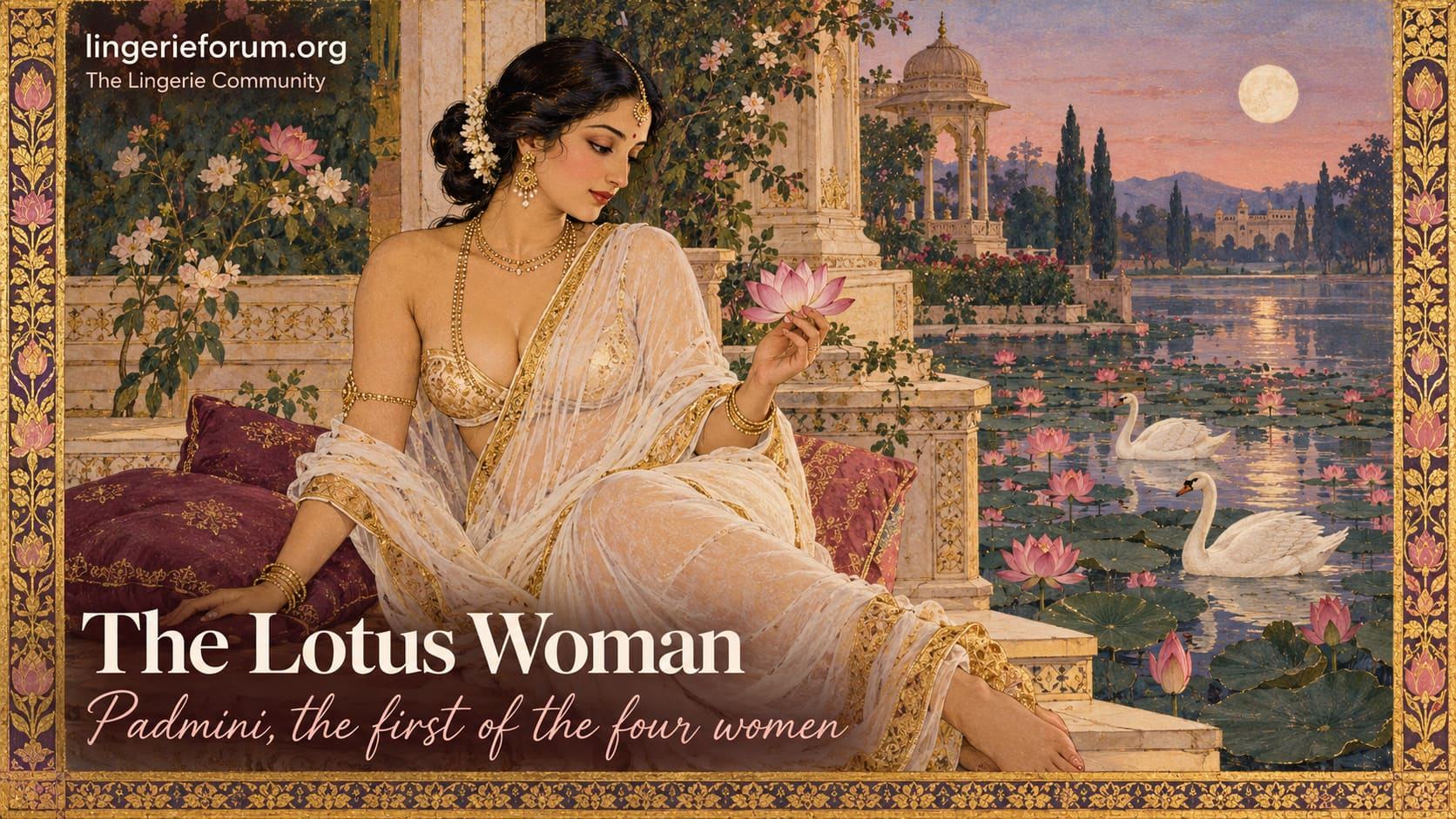
The Padmini, or Lotus-woman, is the first and most celebrated of the four orders of women in the Ananga Ranga, a classical Indian love manual. The book describes her with a face "pleasing as the full moon", a voice "low and musical as the note of the Kokila-bird", a love of white clothes and fine jewels, and a yoni that "resembles the open lotus-bud". Of all the types in the book, she is the one poets and readers have loved most.
What is the Ananga Ranga?
The Ananga Ranga, "the Stage of the Bodiless One", was written in Sanskrit by the poet Kalyana Malla in the fifteenth or sixteenth century, and translated into English by Richard Burton and Forster Fitzgerald Arbuthnot in 1885. It sorts women into four orders, each with her own face, body, voice, yoni, tastes and temperament. All the quotations here come from Richard Burton's 1885 translation of the Ananga Ranga.
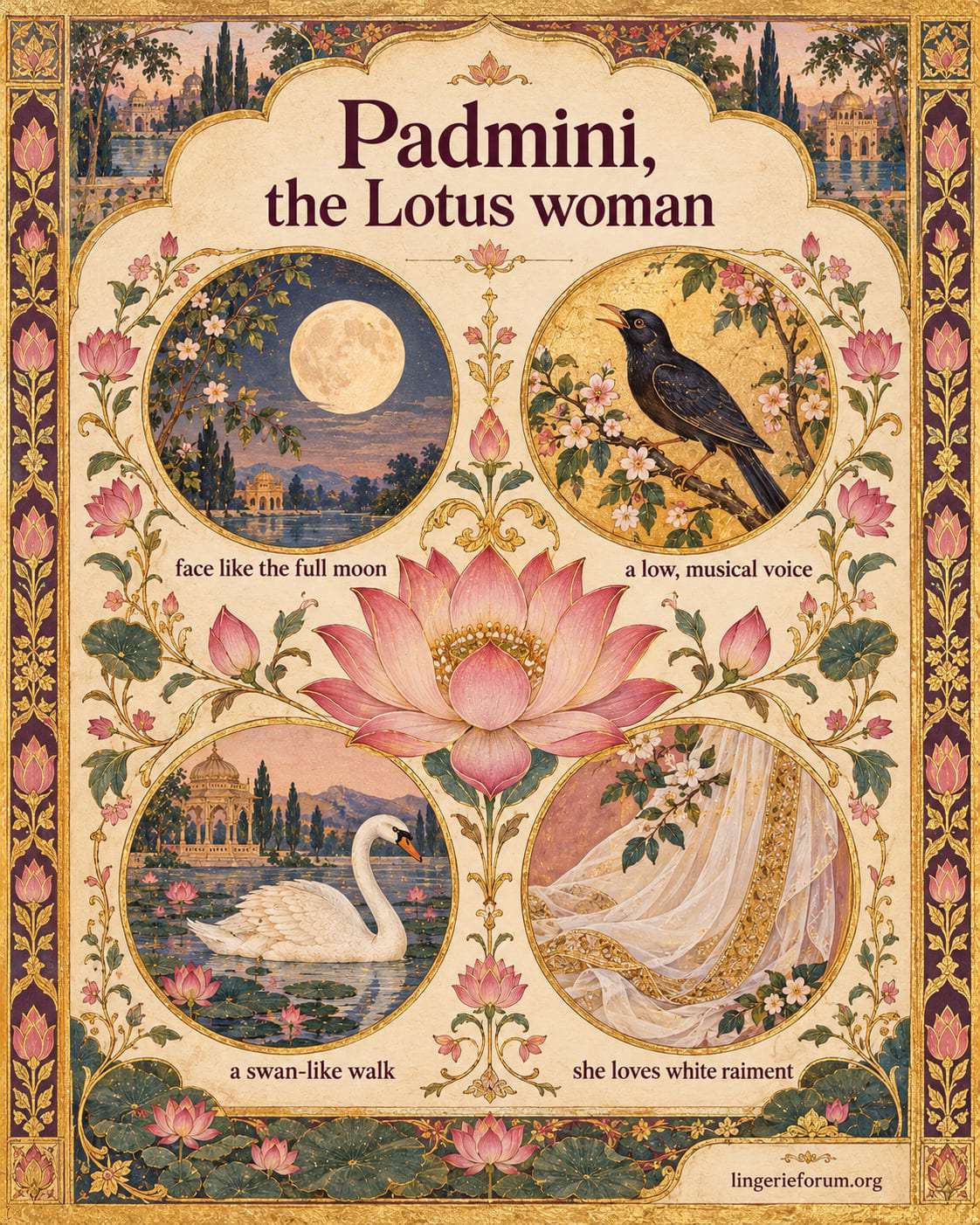
Who is the Lotus woman?
She is described from head to toe as a portrait in flowers and light. Her body is "soft as the Shiras or mustard-flower"; her skin "fine, tender and fair as the yellow lotus"; her eyes "bright and beautiful as the orbs of the fawn". Her neck is "goodly shaped as the conch-shell". She "walks with swanlike gait".
And the image that gives her her name: "Her Yoni resembles the open lotus-bud, and her Love-seed (Kama-salila, the water of life) is perfumed like the lily which has newly burst." In Indian art and temple symbolism, the lotus is one of the oldest emblems of the feminine, so this is the highest praise the book knows how to give.
What does the book say about her character?
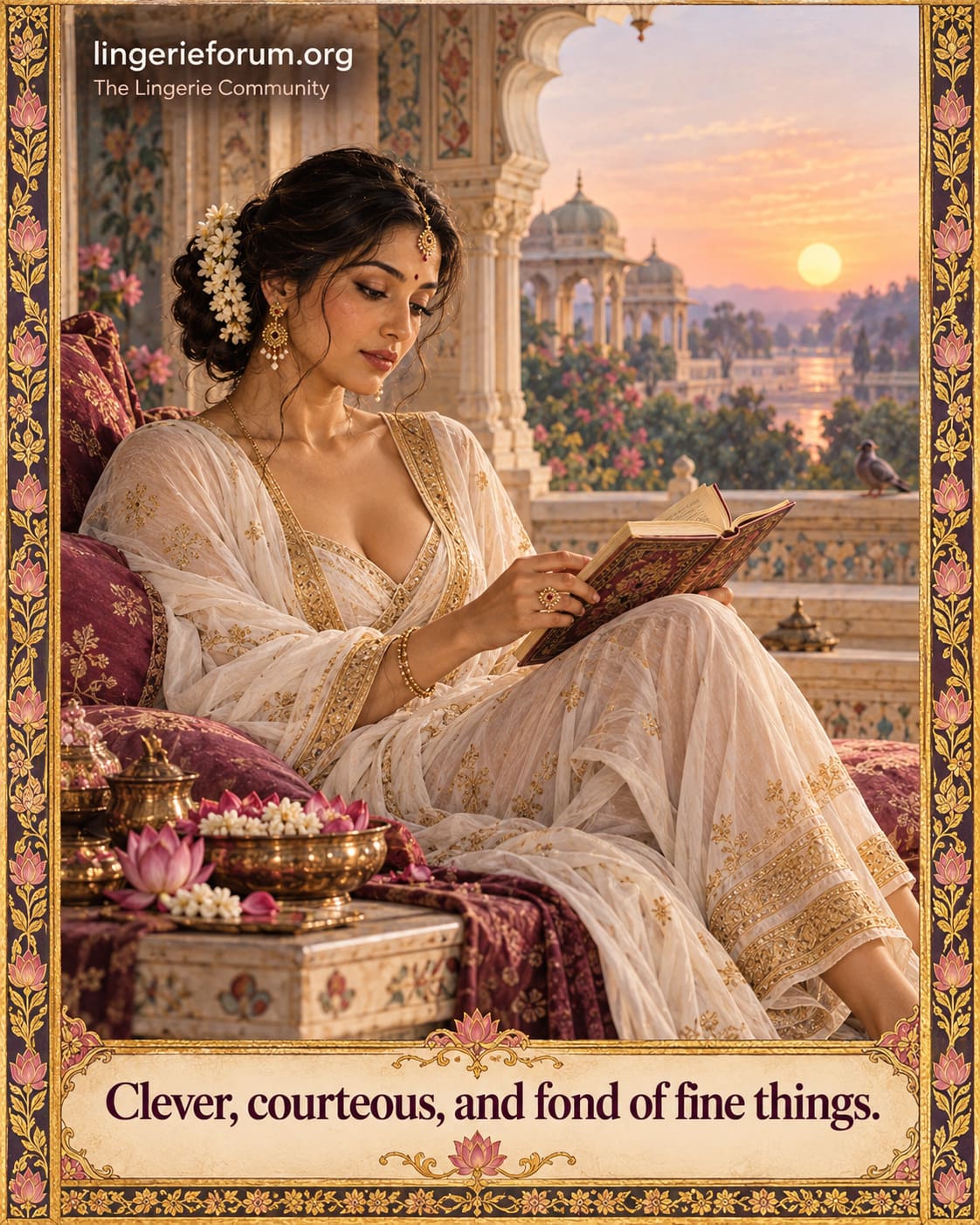
The Padmini "delights in white raiment, in fine jewels, and in rich dresses". She "eats little, sleeps lightly", and is described as "clever and courteous", devout and fond of learned conversation. She is a morning person, too: the book says she, like the day-lotus that "opens its eyes to the sunlight", is happiest in the bright hours.
How do I know if I am a Lotus woman?
The book gives signs, not tests: the soft body, the gentle voice, the love of white and of fine things, the light appetite, the love of mornings. If some of that sounds like you, you are welcome to the lotus. The book's own warning is worth keeping close: "Mostly the temperaments are mixed; often we find a combination of two and in some cases even of three," and the types "are seldom found pure". Kalyana Malla never expected any woman to be exactly one of them.
What does the folklore say about the Lotus woman?
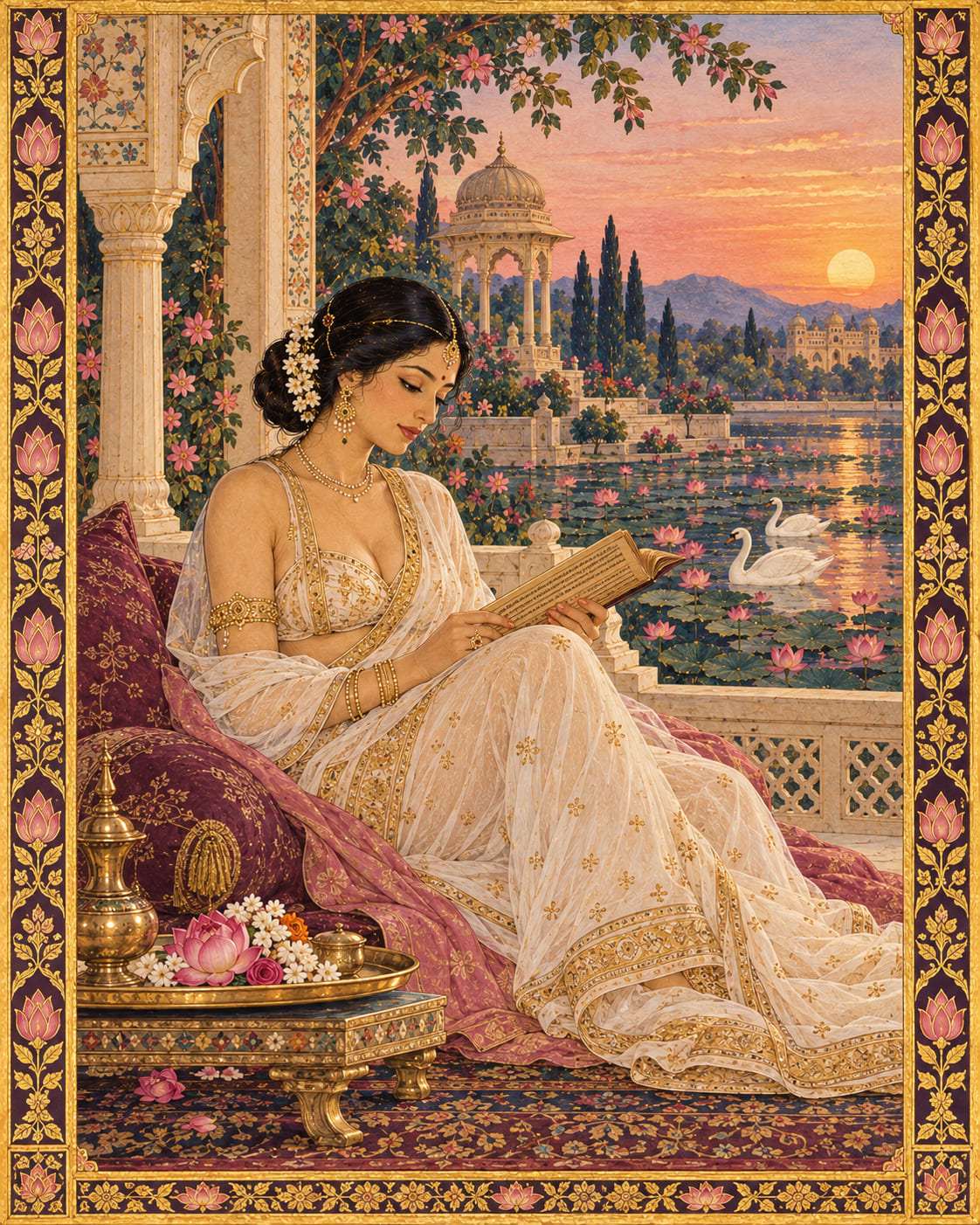
What the folklore says. In the Ananga Ranga the Padmini is the ideal the whole book begins with: moon-faced, swan-footed, lotus-scented, clever, courteous and devoted. She is also the only one of the four about whom Kalyana Malla has nothing unkind to say, which is why she is the most quoted. The lotus-bud comparison has outlived the book itself: it is the oldest ancestor of every "flower" name for the vulva, including the modern tulip; see Barbie, Curtain, Horseshoe, Pie, Tulip: The Five Vulva Shapes and Their Stories.
Is any of this true?
It is poetry, not measurement: one fifteenth-century author's way of admiring and sorting women, shaped by his time. Read it the way you would read an old love poem, for its images and its delight, and take from it whatever describes you. Nothing in it is a verdict, and its author said himself that nobody fits one type.
The short version
The first of four women in a classical Indian love manual: a moon face, a musical voice, white clothes, a light appetite, a love of mornings, and a yoni like "the open lotus-bud". The book's own verdict: she is the ideal, and nobody is ever purely one type.
Sources
- Richard Burton's 1885 translation of the Ananga Ranga - Chapter I, Section II, and Section IV.
Comments
Loading comments...