The Elephant Woman (Hastini): The One Who Takes Her Time
In the Ananga Ranga, the Hastini or Elephant-woman is the fourth of the four women: named after the "handed one", the elephant, and described as slow, sensual and happiest with lovemaking that lasts a long time. Who she is in the book, what we left out of a harsh old text, and why "the longer the better" might be the best line in it.
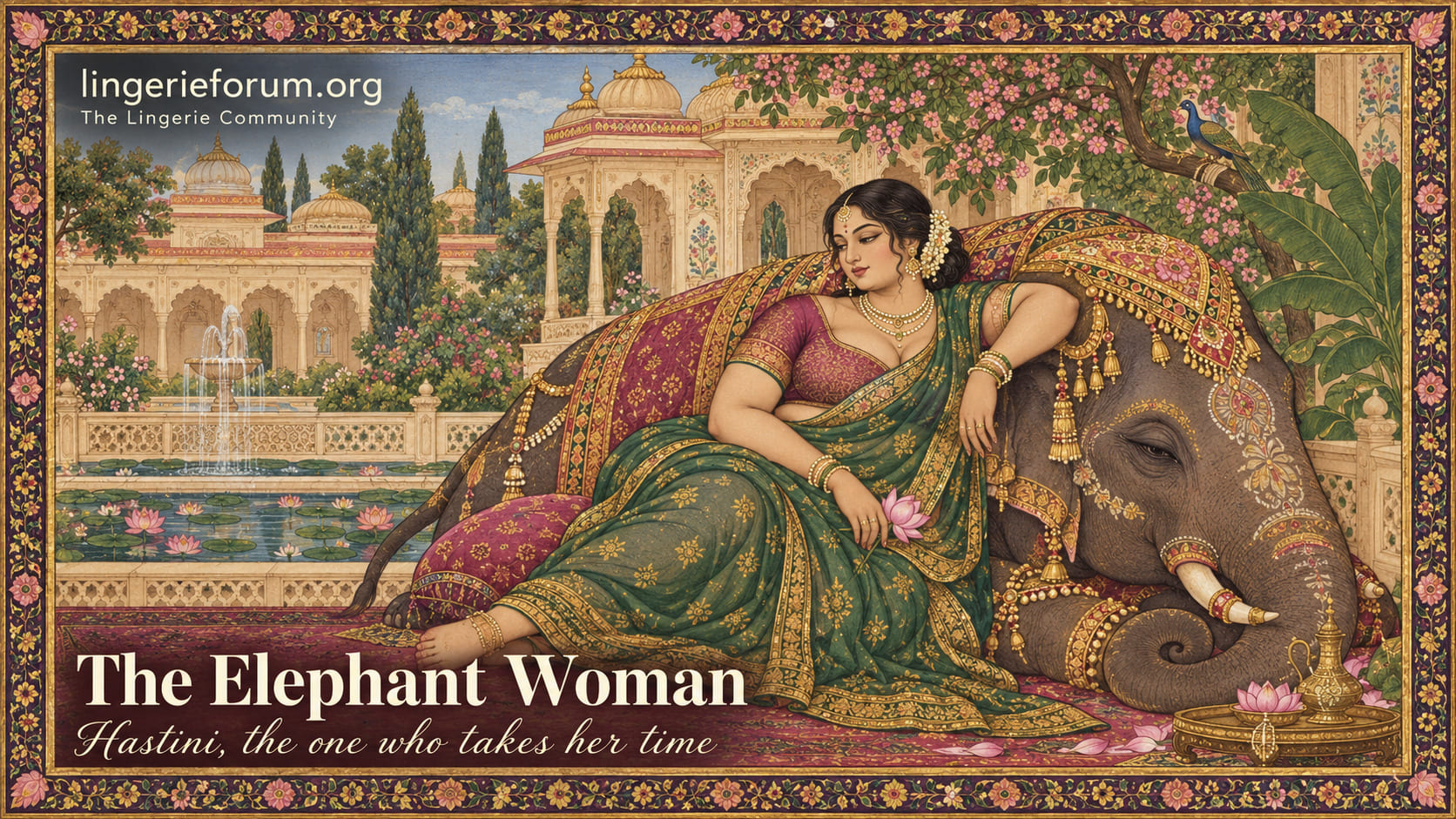
The Hastini, or Elephant-woman, is the fourth of the four orders of women in the Ananga Ranga. The book names her after the elephant, the "handed one", describes her as full-bodied and unhurried, and says she is happiest with lovemaking that is prolonged: "in fact, the longer the better". She is the one of the four who takes her time.
What is the Ananga Ranga?
The Ananga Ranga, "the Stage of the Bodiless One", was written in Sanskrit by the poet Kalyana Malla in the fifteenth or sixteenth century, and translated into English by Richard Burton and Forster Fitzgerald Arbuthnot in 1885. It sorts women into four orders, each with her own face, body, voice, yoni, tastes and temperament. All the quotations here come from Richard Burton's 1885 translation of the Ananga Ranga.
Who is the Elephant woman?
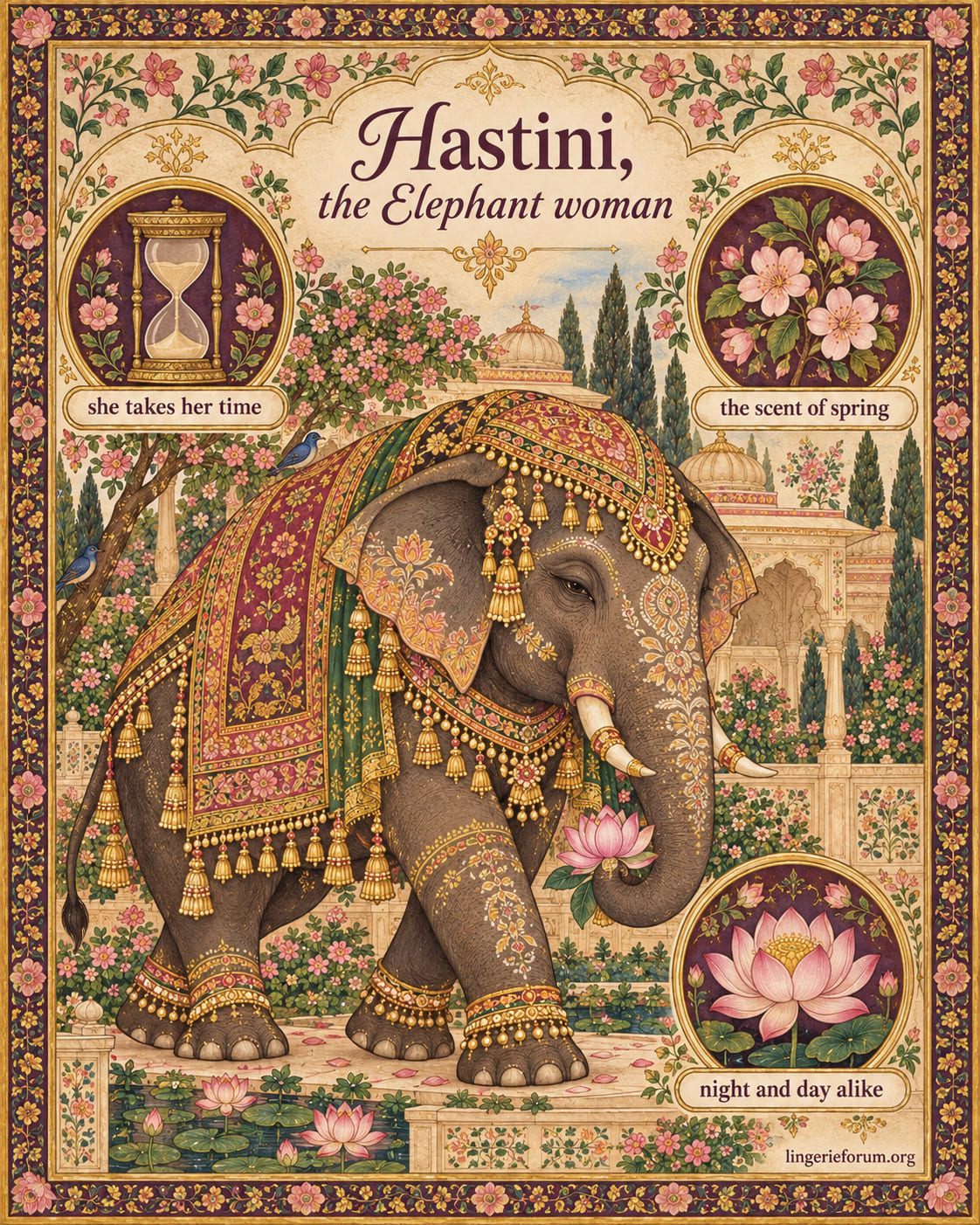
Burton explains the name in a footnote: the elephant is called the "handed one" because of its trunk, and Hastini comes from the same idea. The book describes her as "short of stature", full-bodied, with "tawny" hair and "large" lips, and a slow walk. It says her love-water "has the savour of the juice which flows in the spring from the elephant's temples", the famous musth of the elephant in spring, a byword in Indian poetry for passion.
The elephant, it is worth saying, is not a joke in Indian culture. It is Ganesha's form, the animal of kings and of the rain god Indra, the emblem of strength, wisdom and good fortune.
What does the book say about her character?
The Hastini "is tardy in the Art of Love, and can be satisfied only by prolonged congress, in fact, the longer the better". She is unhurried in walking and in love, and she is the one type the book says is happy at any hour, night or day.
What did we leave out?
A fair amount. Kalyana Malla is at his least generous about the Hastini, in words about her appetite and her manners that we are not going to repeat. Read today, the kinder half of his description is a woman who is full-bodied, slow, sensual and not interested in being rushed. That is a description plenty of women would recognise, and be glad of.
How do I know if I am an Elephant woman?
If you like to take your time, in everything, and a quick anything leaves you cold, the elephant is yours. The book's own warning is worth keeping close: "Mostly the temperaments are mixed; often we find a combination of two and in some cases even of three," and the types "are seldom found pure". Kalyana Malla never expected any woman to be exactly one of them.
What does the folklore say about the Elephant woman?
What the folklore says. In the Ananga Ranga the Hastini is the slow, sensual one, named after the animal Indian tradition connects with strength, wisdom and good fortune, and scented like the elephant in spring. Her one clear preference, "the longer the better", is the most quoted line about her, and the most modern-sounding thing in the whole book.
Is any of this true?
It is poetry, not measurement: one fifteenth-century author's way of admiring and sorting women, shaped by his time. Read it the way you would read an old love poem, for its images and its delight, and take from it whatever describes you. Nothing in it is a verdict, and its author said himself that nobody fits one type.
The short version
The fourth of four women: full-bodied, unhurried, happy at any hour, and named after the most revered animal in Indian tradition. The book is harsh about her and we left that out; its best line about her, "the longer the better", we kept.
Sources
- Richard Burton's 1885 translation of the Ananga Ranga - Chapter I, Sections II and IV, with Burton's footnotes.
Comments
Loading comments...