Growing It Back: The Six Weeks Nobody Writes About
Every article tells you how to get a style. None of them tell you what happens if you stop. Here is the regrowth phase with a real timeline: why week one itches like that, why week four looks patchy and is not, when it stops feeling like stubble and starts feeling like hair, what actually helps with the itch and the bumps, and how long the whole thing honestly takes.
Listen
8 min 39 s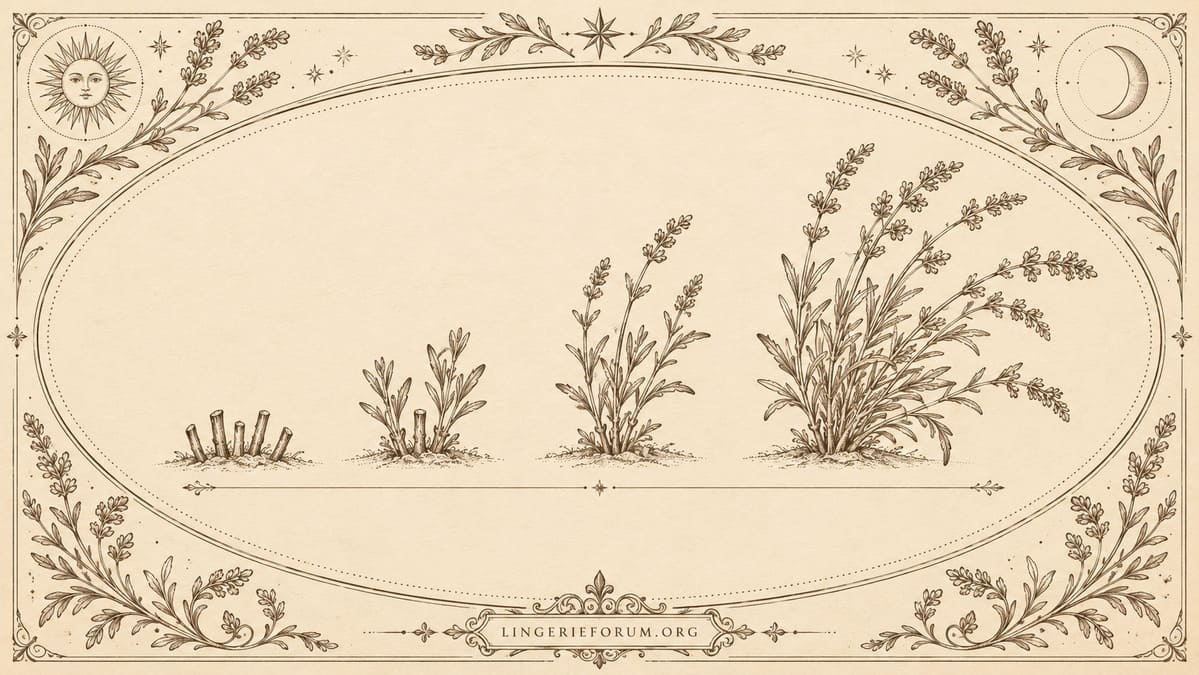
It is day four and you cannot stop thinking about it.
Not in a dramatic way. Just a low, constant prickle every time you cross your legs or sit down. You have checked twice in good light and there is nothing to see except stubble, and yet it is all you can feel.
This is the stage nobody writes about. Every article on intimate hair is about arriving somewhere: a shape, an appointment, a technique. Almost nothing covers what happens when you stop, which nearly everyone does at least once. So here is the grown-out phase, treated as what it is: a normal stage with a timeline, not a failure state between two proper styles.
Why it itches like that
The itch is not your skin objecting to hair. It is mechanical. A razor cuts each hair off flat, at the widest part of the shaft, right at the skin. What grows back is a blunt-ended bristle with no taper, stiff enough to press into whatever it touches, including the skin beside it. Thousands of those, in an area that spends the day folded against itself and wrapped in fabric. That is the whole explanation. Nothing has gone wrong and nothing is infected.
It also tells you which regrowth will itch. Anything that cuts, so shaving, trimming and cream, leaves blunt ends and an itchy fortnight. Anything that pulls from the root, so waxing, sugaring and epilating, gives a new hair with its original tapered tip, soft from the moment it appears. That difference is the most common reason women switch to waxing.
The timeline
Bodies vary.
Days one to three. Skin settles, with pinprick redness or small bumps for a day after a wax.
Days three to ten, from shaving. Peak stubble and peak itch. This is where a lot of women shave again, which is reasonable at day five and resets the clock.
Week two. Once hairs are long enough to lie down rather than stand up, the poking stops, and most of the itch goes with it, quite suddenly.
Weeks three and four. The stage that looks most uneven, and the one that convinces people something is wrong. Sparse in places, dense in others, several lengths at once. Follicles are not synchronised; each runs its own cycle, and they were never all cut on the same day of theirs.
Weeks four to eight. Lengths even out, density fills in, and it reads as hair rather than as regrowth.
Months three to six. Full length, and then it stops growing. Pubic hair has a short growing phase compared with head hair, so it reaches its own terminal length, a few centimetres for most people, and stays there. The fear of it becoming unmanageable if left alone is one of the tidier myths in this subject.
Coming off years of regular waxing, the first cycle back can be thinner than you remember. It usually recovers, and occasionally some of it does not come back.
What actually helps in week one
Shaving is the one thing that makes it worse. It works for about four hours and restarts the cycle. Day ten is the far side of this, and if you would rather shave than wait, that is a legitimate answer too.
Trimming is the middle ground. A guarded trimmer leaves a blunt end further from the skin, so it presses into you less.
Moisturise the skin, not the hair. A plain unscented emollient, morning and night. Dry skin itches on top of the mechanical itch, and that is the half you can fix. Cool water, nothing fragranced.
Cotton, looser than usual. Tight synthetics hold heat against skin and press the bristle back in. A week of comfortable knickers is the fix, not a concession.
Leave anti-itch creams alone unless someone has told you to use one. Steroid creams on intimate skin are not a casual purchase, and an itch lasting well past the regrowth window, or arriving with discharge, soreness or a rash, is a different problem worth a proper look.
Ingrown hairs, which are the real problem
The itch ends; ingrowns are the part that leaves marks. A hair ingrows when it cannot get out cleanly: it curls back under the surface, or the follicle blocks, and the body inflames around it. Coarse and curly hair ingrow more readily, which is biology rather than a technique failure, and the crease of the thigh is the worst spot: soft, warm, permanently rubbed.
What genuinely helps: gentle exfoliation two or three times a week, starting a few days after removal, with a chemical exfoliant rather than a hard scrub, since scrubbing an inflamed follicle is how a bump becomes a spot. Loose clothing for a few days. And not picking, because this skin marks easily and a dark mark can take months to fade.
The line worth knowing: an ingrown hair is a single bump that settles. Something hot, spreading, increasingly painful or producing pus is not, and belongs in front of a doctor. So do boils that keep returning to the same places.
The part that is not physical
Somewhere around week three, a lot of women quietly conclude that something is wrong with them. It has been long enough to feel like a decision and not long enough to look like one.
Nothing has gone wrong. There is an in-between stage in growing out anything, a fringe, a colour, and this one is no different except that nobody discusses it, so you go through it without the reassurance every other stage of grooming comes with.
And it is worth saying plainly, because plenty of women have been told otherwise their whole lives: hair is not a hygiene matter. Removal is a preference, like a fringe or a manicure, and the arguments dressed up as cleanliness are advertising that got old enough to sound like common sense. Bare is a good way to be. So is hairy, and so is not thinking about it at all. Regrowth is not a lapse; it is what hair does when nobody interferes with it.
If the worry has drifted from the hair to what is underneath it, which happens once everything becomes visible, Are My Labia Normal? The Honest Answer is the piece for that.
Growing out on purpose, for a reason
For a wax, most therapists want about a quarter of an inch, roughly six millimetres, which is two to three weeks from a shave. Shorter and the wax cannot grip, so you get a painful appointment and a poor result.
For laser, the opposite rule. It needs the root intact, so no waxing, sugaring, epilating or plucking for four to six weeks beforehand, and you shave the day before, because surface hair burns.
Under clothes, while it happens
Full briefs, shorts and high-waisted cuts cover the whole area, so this is the stretch where the fullest knickers in the drawer are the right tool. What shows the in-between is anything narrow at the sides or sheer at the front: high-leg thongs, French-cut briefs, pale swimwear.
If there is a fixed date in the diary, count back. A holiday is easiest either freshly done or comfortably grown, and hardest at day five.
And then it is just hair again
The uncomfortable part is short, front-loaded and mostly mechanical: ten days of prickle, a month of looking uneven, and then a body that requires nothing from you.
Plenty of women go through that and go straight back to waxing, having decided the fortnight was worse than the appointments. Plenty of others reach week eight and never think about it again. Both are the same decision made with the same facts, which is all this article is for: not to talk anyone into anything, only to make sure that nobody in the middle of it is left thinking the itching means something is wrong with her.
Comments
Loading comments...