The Athletic Body Shape: Muscle, Energy and the Folklore of Vigour
The athletic shape is muscular and firm, with broad-ish shoulders, a lightly defined waist and hips in line with the shoulders. What the shape is, what fits it, and its folklore: Sheldon's energetic, adventurous mesomorph, Culpeper's bold and eloquent choleric, and the one place the old systems flatly contradict each other.
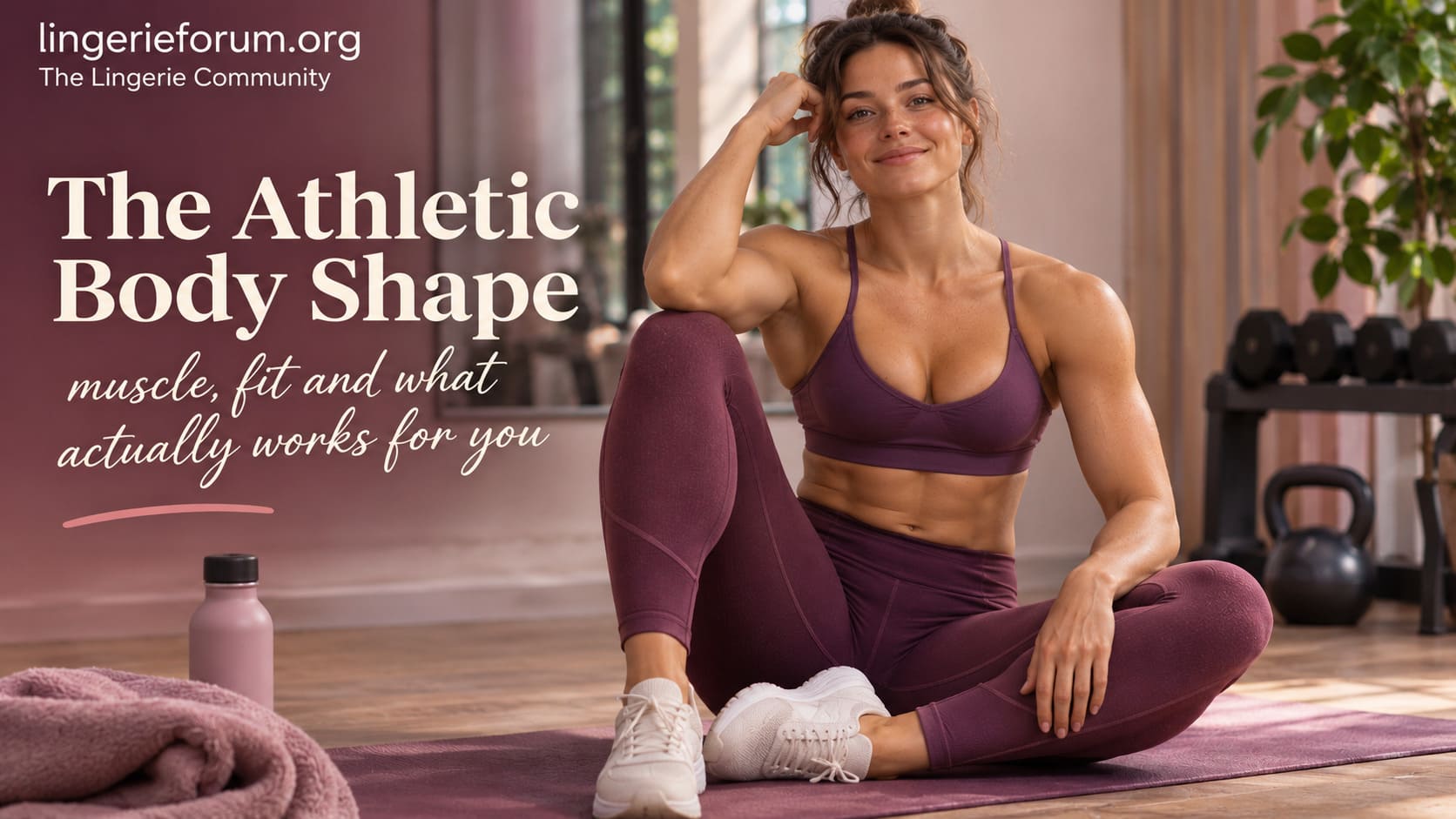
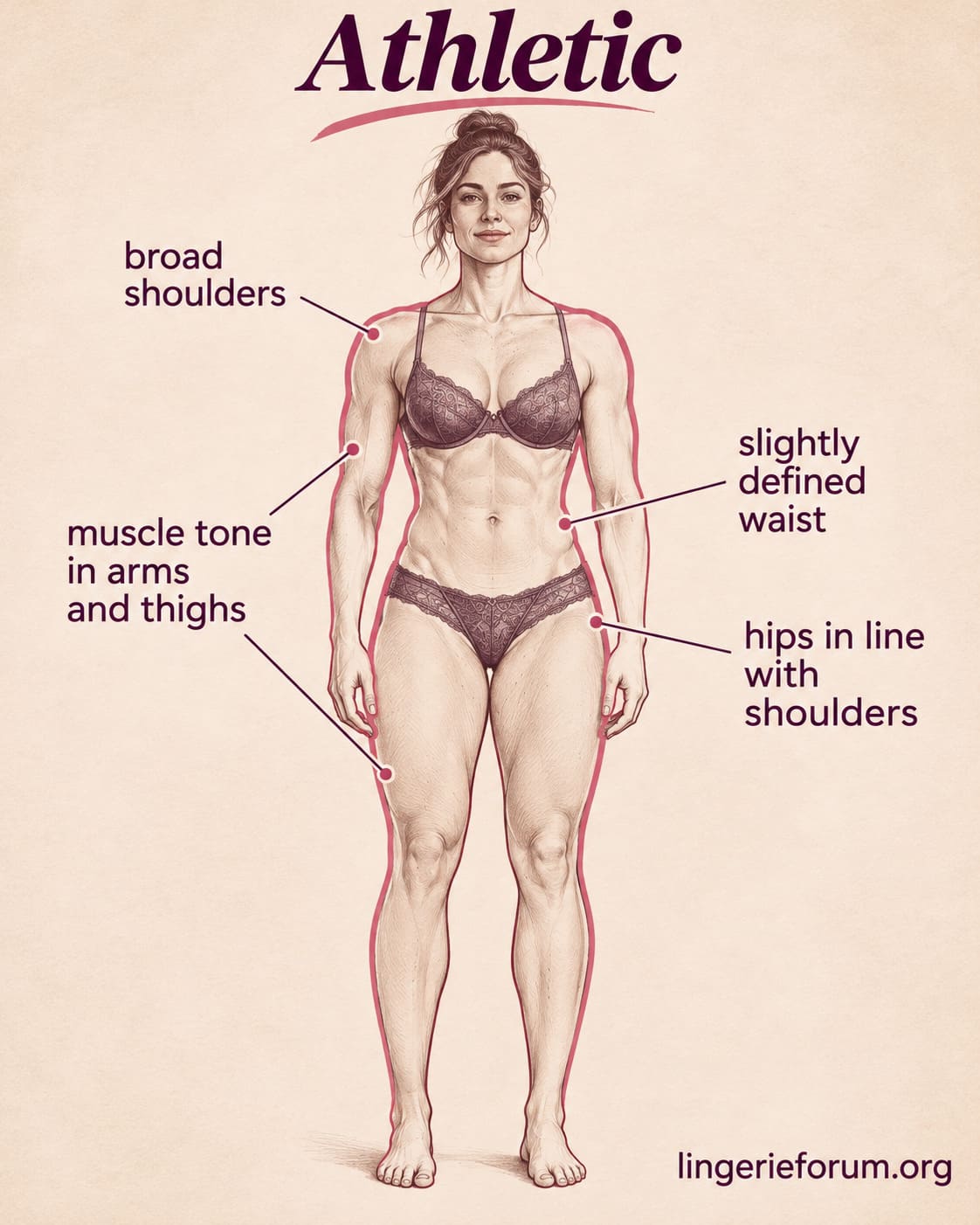
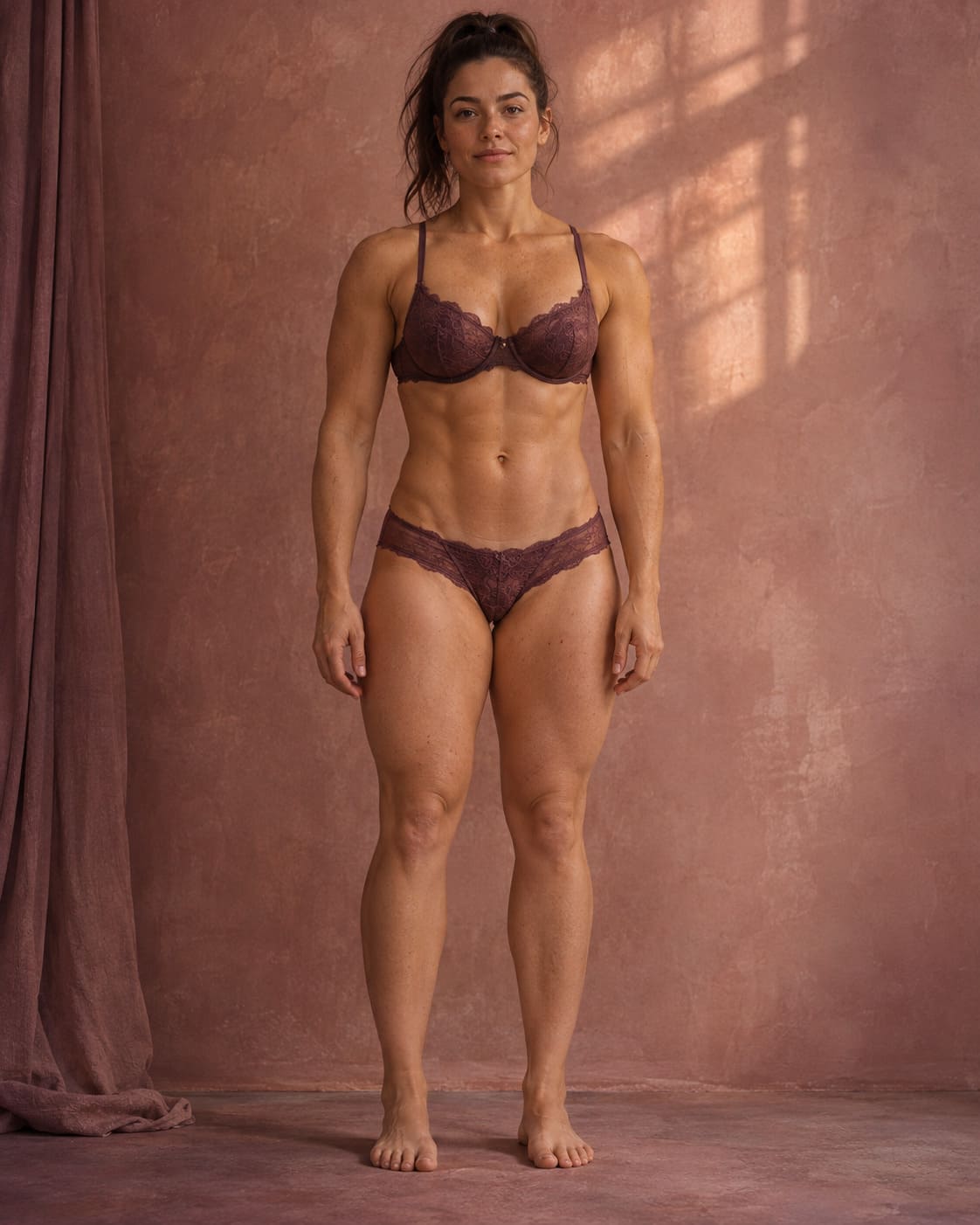
The athletic body shape is muscular and firm, with shoulders on the broad side, a lightly defined waist, and hips roughly in line with the shoulders. Muscle tone shows in the arms, abdomen and thighs. It is a shape many women arrive at through sport and many are simply born with, and it has a lively folklore: nearly every old system that described a muscular build gave it energy and courage.
What is an athletic body shape?
Straight-ish lines built on muscle rather than on curves: broad or square shoulders, a waist only slightly narrower than the bust and hips, strong thighs and calves. The bust is often small to medium. Some lists group it with the rectangle, but the athletic shape is defined by muscle tone as much as by proportion.
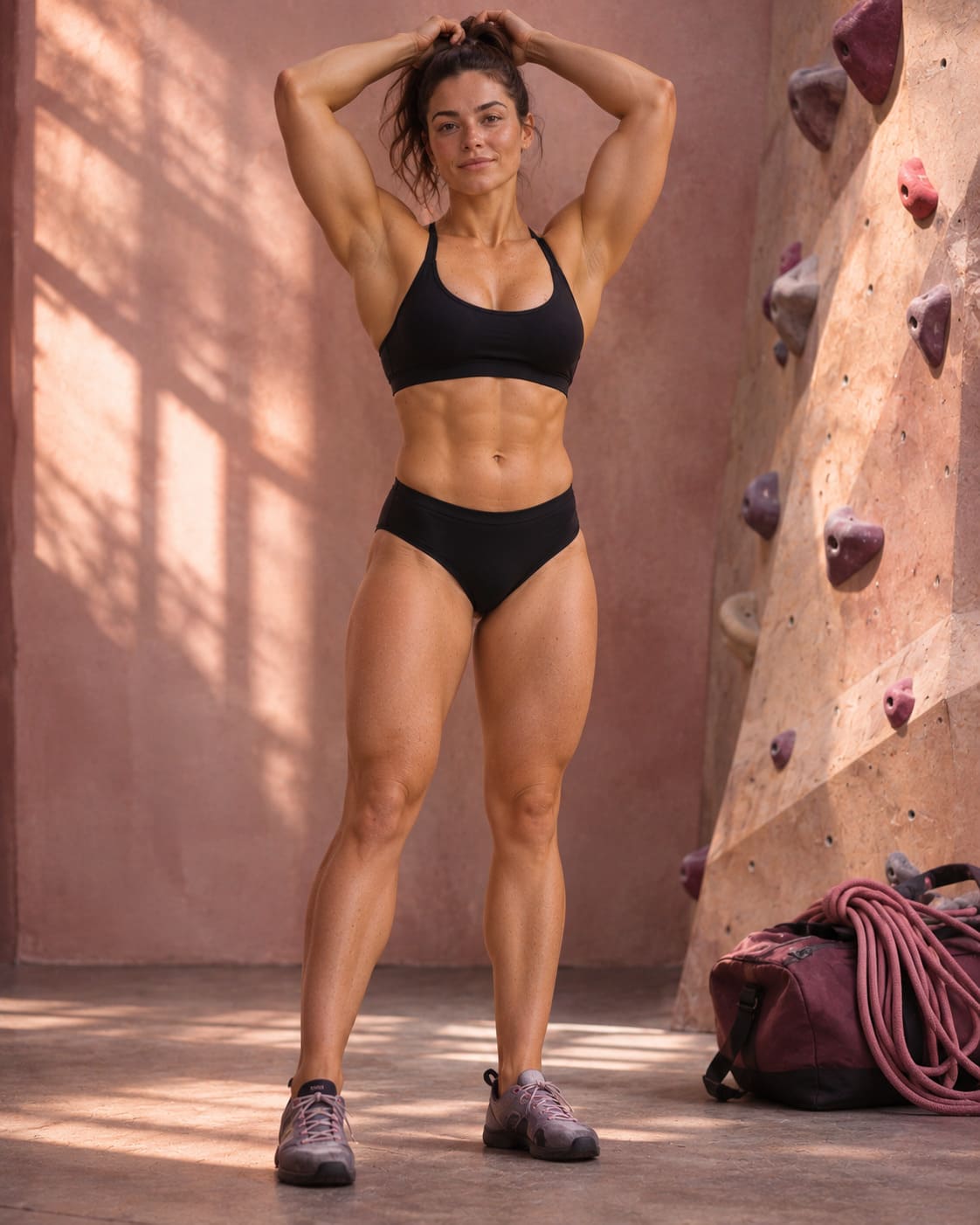
How do I know if I am athletic?
Measure around the fullest part of your bust, the narrowest part of your waist, and the widest part of your hips, and look at yourself straight-on in a mirror. The body shape calculator does the arithmetic. Most women land between two shapes, and the numbers move with weight, age, pregnancy and the time of the month, so read the answer as a description of now. If your measurements are fairly even, your waist only slightly defined, and your shoulders and thighs visibly muscular, you are athletic. If the shoulders are clearly wider than the hips, look at the inverted triangle too.
What fits an athletic body shape?
- Bras: a band that sits firmly on a muscular ribcage without digging; stretch cups and bralettes for smaller busts, encapsulation sports bras for training.
- Underwear: stretch fabrics that move with strong thighs; seamless styles under leggings.
- Clothes: stretch where you have muscle, especially in the thigh and shoulder; wrap and belted styles if you want to mark the waist; anything that shows off shoulders and arms if you like them.
For the full guide, see 10 Women's Body Shapes Explained.
What does the folklore say about athletic women?
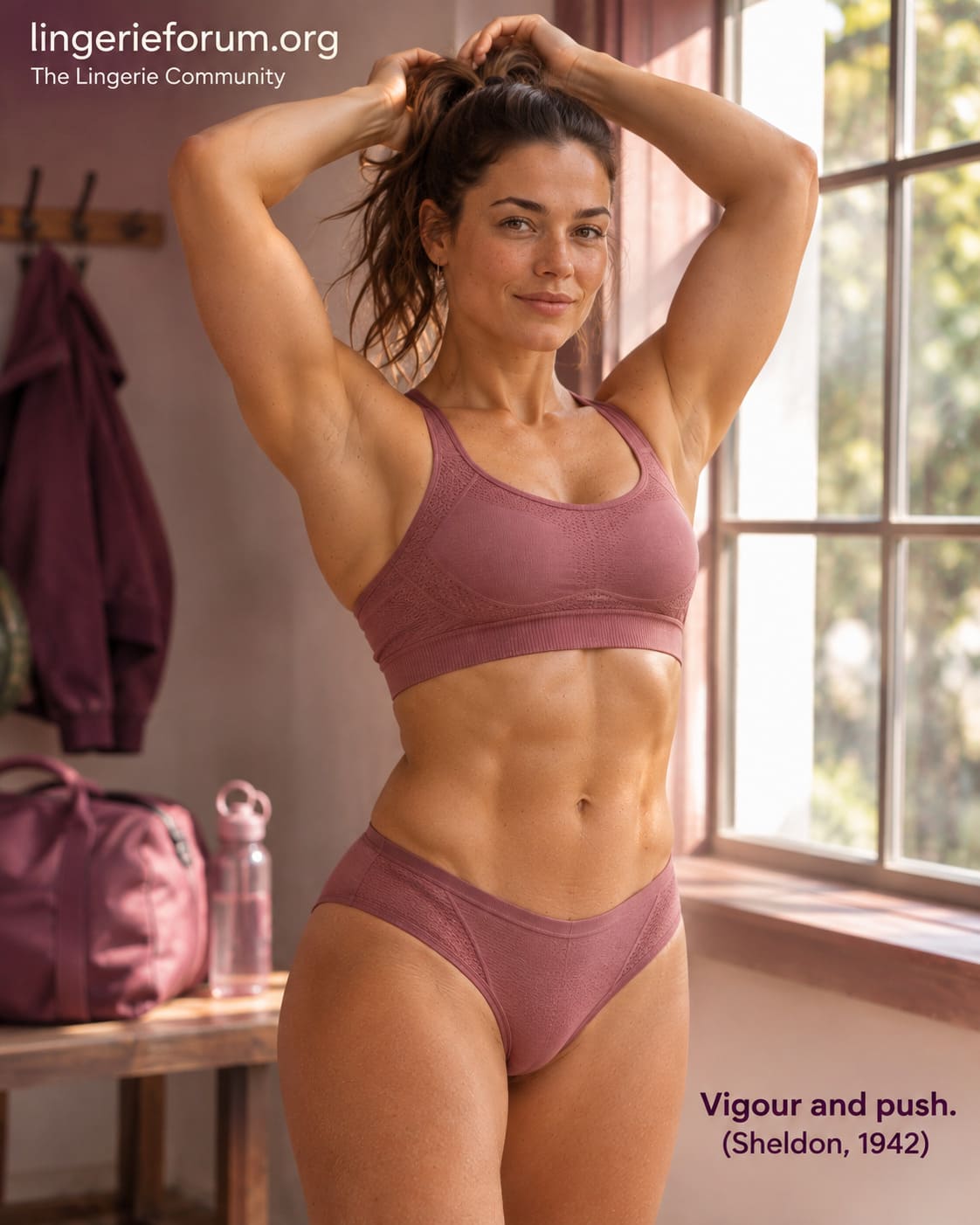
What the folklore says. The American psychologist William Sheldon, in The Varieties of Temperament (1942), called the muscular build the mesomorph and its temperament somatotonia: "a predominance of muscular activity and of vigorous bodily assertiveness. These people have vigor and push." His scale lists "Love of Physical Adventure", "The Energetic Characteristic" and "Need and Enjoyment of Exercise". Nicholas Culpeper's 1652 English Galen, Galen's Art of Physick, gives the lean, compact choleric person a quick mind: "naturally quick witted, bold", "eloqent, corragious, stout-hearted". And studies of body stereotypes find that people consistently rate the muscular build most positively of all.
Here is the contradiction. Kretschmer put the athletic build with his reserved, inward-looking "schizothyme" temperament, the one he credited with "exact logicians" and "systematists"; Sheldon made the same build the bold extravert. Same body, opposite personalities. Both men built their types from men, and we have left out their harsher lines.
Is any of that true?
No. No study has shown that a body's silhouette predicts character, and the research that exists points the other way: it shows how readily people pin traits onto bodies. One study found that people evaluate bodies on valence and agency and read personality into body shape consistently, which measures the viewers' agreement, not the truth. Another, with Nigerian schoolchildren, put it perfectly: the children attributed positive character traits to their perceived somatotypes and undesirable traits to the physiques with which they were dissatisfied. The traits followed the feelings, not the bodies. Tests of Sheldon's own claims found no significant associations between somatotype and temperament. Enjoy the box above as history, and as fun.
The short version
Muscular, fairly straight lines, lightly defined waist. Stretch where you are strong. The folklore calls it energetic, adventurous, bold and quick-witted, except where it calls it logical and reserved.
Sources
- William Sheldon, The Varieties of Temperament, 1942
- Nicholas Culpeper, Galen's Art of Physick, 1652 - "Of the Complexions Simple".
- Ernst Kretschmer, Physique and Character, English translation 1925
- Kirkpatrick and Sanders 1978, body-type stereotypes across ages 6 to 60 - read as an abstract.
- Hu et al. 2018, First impressions of personality traits from body shapes - read as an abstract.
- Salokun and Toriola 1985, perceived somatotypes and character traits - read as an abstract.
- Catell and Metzner 1993, somatotype, temperament and self-actualization - read as an abstract.
Comments
Loading comments...