Thin Lips: What Face Reading Claims, and Why It Has Changed Its Mind
Thin lips show a slim band of colour at rest. What the shape is, what time does to every lip, and how face reading has treated thin lips: harshly in the old books, and as independent, capable and self-possessed in modern ones, which tells you how much the readings depend on the century.
Thin lips show a slim band of colour when the mouth is relaxed, on one lip or both. Few features have been treated so differently by different centuries: the old face-reading books were harsh about thin lips, and modern ones describe them as independent and capable. Neither was ever tested. What changed was the readers.
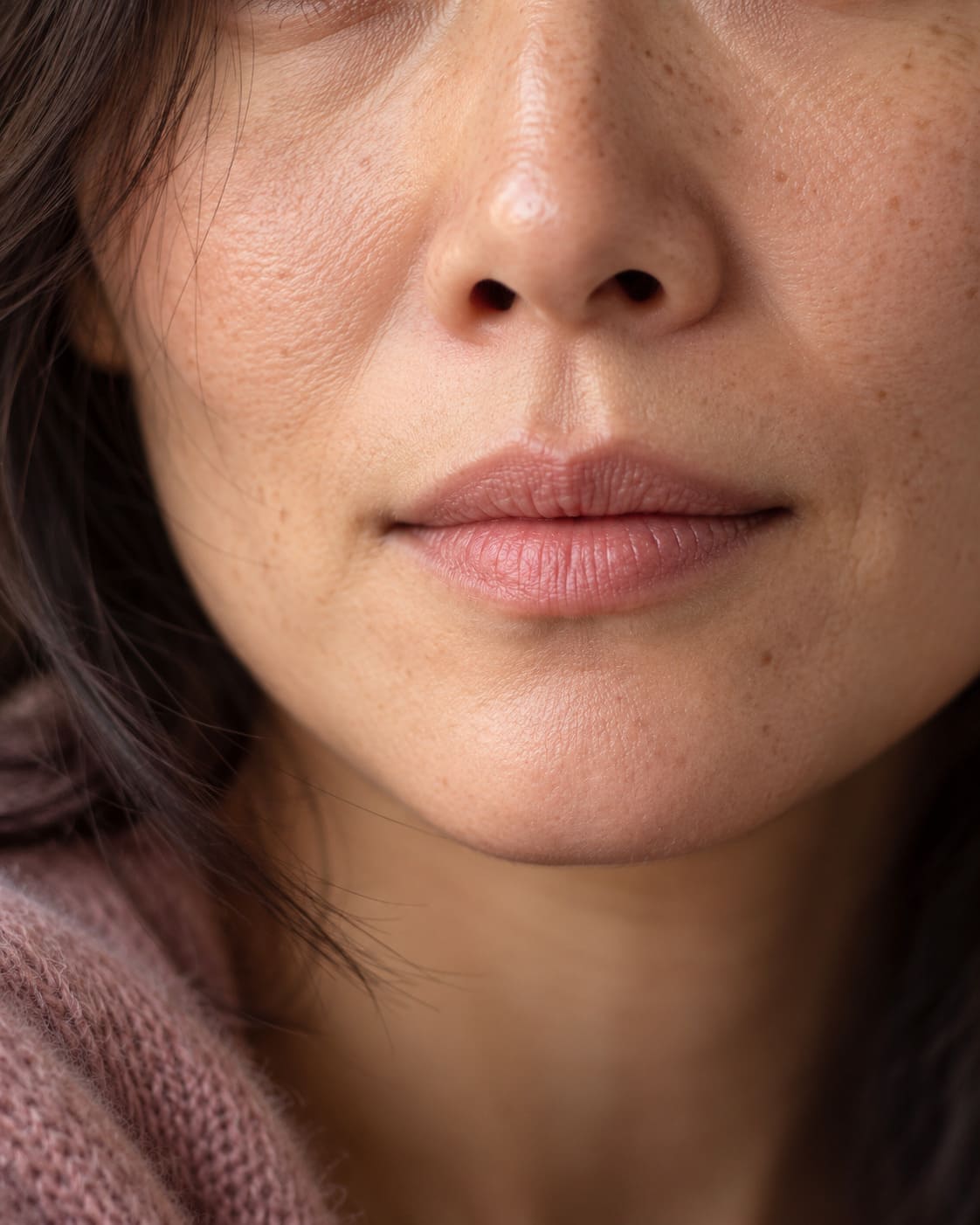
What do thin lips look like?
At rest, the red of the lips is a narrow band, and the closed mouth reads as a clean line. Thin lips can sit in a wide or narrow mouth, with a sharp or soft cupid's bow; slimness is the only defining feature.
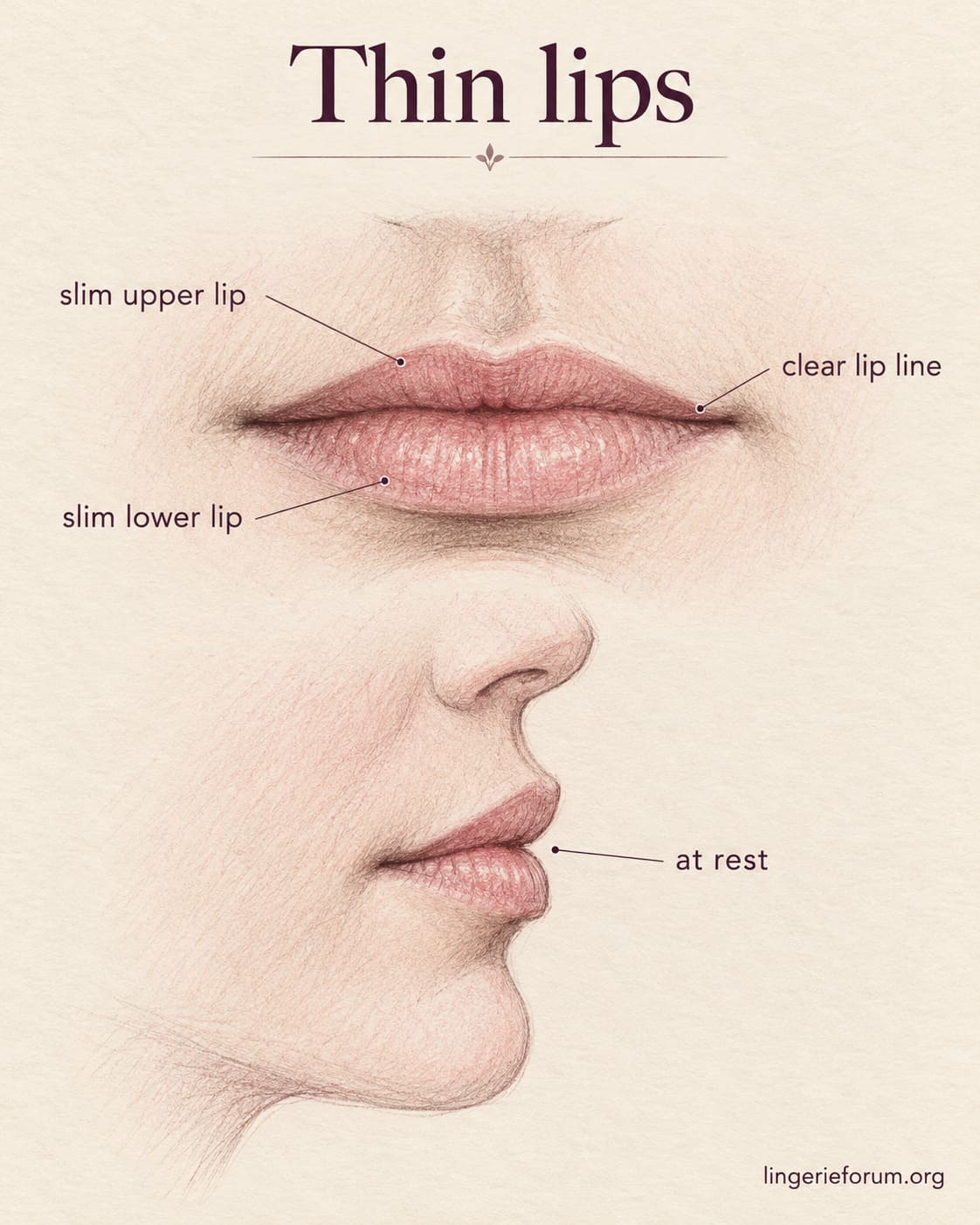
How do I know if I have thin lips?
Relax your face, lips gently together, and look straight into a mirror at eye level, or take a photo with the camera level with your mouth. No lipstick, no pout, no smile: the shape at rest is the one every tradition reads. If the colour of both lips is a slim band, yours are thin. If only the upper lip is slim, you have the far more common arrangement where the lower lip is fuller: In adults the lower lip is usually the thicker of the two: a 3D study of lip shape found the lower lip was thicker than the upper lip across the group, and that upper-to-lower ratios did not differ significantly between the sexes or between age groups.

Do lips get thinner with age?
They change shape. Lips change with time for everyone, and the research is more specific than the usual "lips lose volume" line. Studies of the ageing upper lip found it grows longer while the visible red of the lip shrinks and thins; one found that a loss of volume could not be shown, and a histology study concluded the older look comes from lost elasticity rather than to often-postulated but unproven total volume loss. So the visible red becomes slimmer for everyone over time, and lips that were thin at twenty often look much the same at sixty while fuller ones catch up.
Is there anything to fix?
No. Lip shape preferences are not universal: a cross-cultural study found that country of residence, ethnic background, and profession significantly impact individual lip shape preferences, with laypeople in Asia preferring the smallest lips. What counts as ideal depends on who you ask and where they live.
What does face reading say about thin lips?
What the folklore says. Four sources account for almost everything said about lips and character. Shen Xiang Quan Bian, a Ming-dynasty Chinese face-reading compilation traditionally credited to the sage Chen Tuan, opens its section on lips by calling them the city wall of the mouth and the gate of the tongue. Johann Caspar Lavater's Essays on Physiognomy (1770s, quoted from Thomas Holcroft's English translation) declares "As are the lips so is the character". Samuel R. Wells's New Physiognomy (1866) reads love and affection in them. And most of what modern pages say, especially about the cupid's bow, traces to the American face reader Jean Haner, whose views are quoted here from an interview about her book The Wisdom of Your Face.
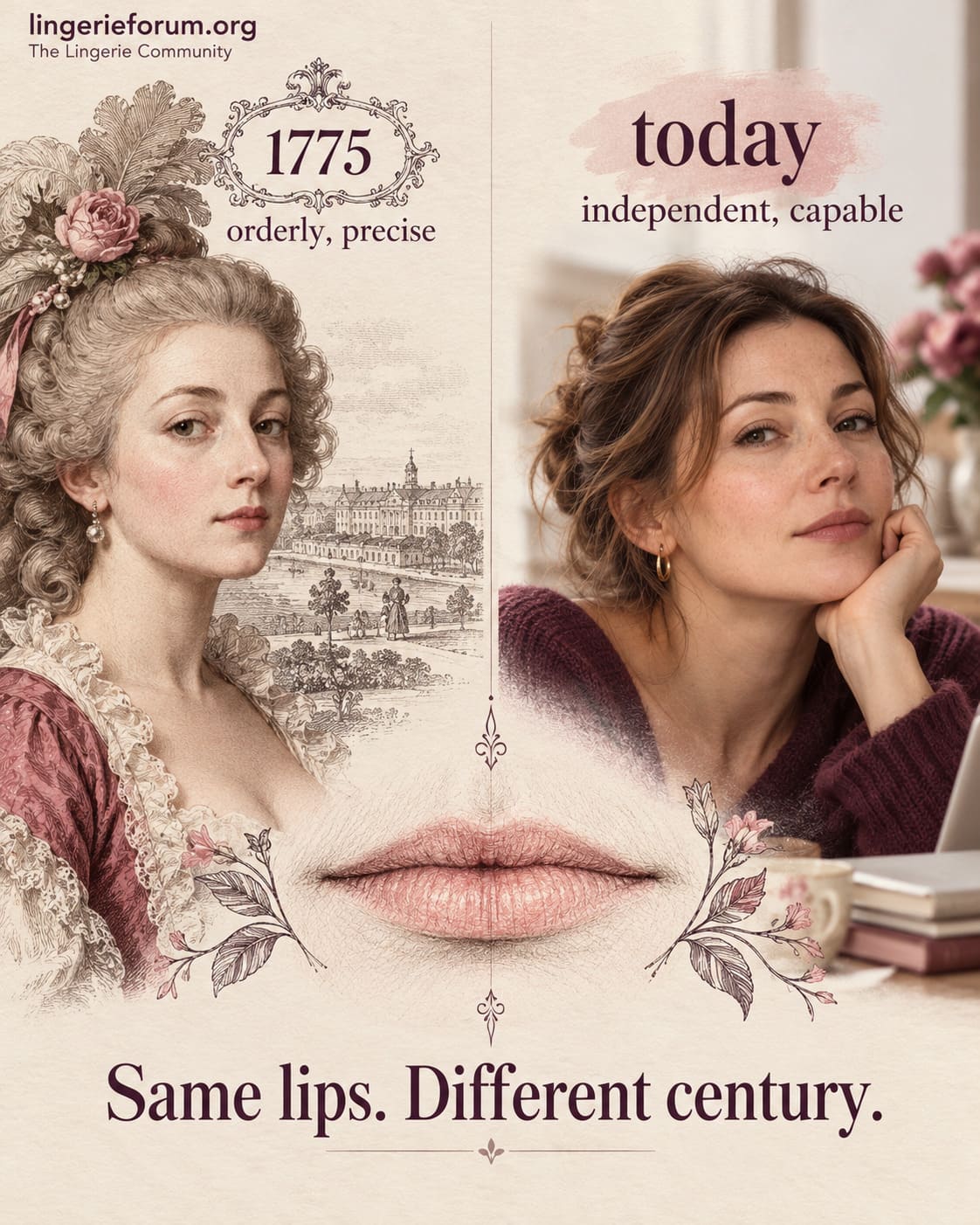
Lavater described a very thin, line-like mouth as belonging to "a lover of order, precision" and industry. Mac Fulfer, an American face reader, has said that "the thin upper lip indicates that I am emotionally guarded". Modern pages describe thin lips as independent, cautious, quick-witted and practical, often as high achievers. Haner says someone with thin lips "can be a loner and be OK with it".
The older books, Chinese and European alike, were far less kind, and we have left their verdicts out. The swing from harsh to flattering over two centuries, for the same lips, is the clearest sign that the readings describe fashions rather than women.
Is any of that true?
No. We found no study that has tested lip shape against measured personality, in any direction. Research on the wider idea, reading character from faces, finds that people agree quickly and are mostly wrong: a review from Alexander Todorov's lab concluded that the diagnostic validity of these attributions has been greatly overstated.
One study shows neatly what lips really change. Strangers rated before-and-after photos of women who had lip filler, and rated the after photos significantly improved compared to the pre-treatment photographs across all nine trait domains, including trustworthiness and intelligence. The women had not changed. The strangers' guesses had. That is what face reading measures: the reader. Enjoy the box above as history, and as a little fun.
The short version
A slim band of colour at rest. Lips lengthen and slim with age for everyone. Face reading once condemned thin lips and now praises them as independent and capable; neither version was ever tested.
Sources
- De Menezes et al. 2011, Three-dimensional analysis of labial morphology - read as an abstract.
- Heidekrueger et al. 2017, Lip attractiveness: a cross-cultural analysis - read as an abstract.
- Iblher et al. 2008, Changes in the aging upper lip - read as an abstract.
- Penna et al. 2009, The aging lip - read as an abstract.
- Mac Fulfer, quoted in TCU Magazine, 2011
- Todorov et al. 2015, Social attributions from faces - read as an abstract.
- Othman et al. 2021, The impact of dermal fillers on perceived personality traits - read as an abstract.
- Shen Xiang Quan Bian, section on lips (Chinese, Wikisource)
- Lavater, Essays on Physiognomy, Holcroft translation - "The Mouth and Lips".
- Wells, New Physiognomy (1866) - chapter XI.
- Jean Haner, interviewed in Cosmopolitan India
Comments
Loading comments...