Why Does My Resting Face Look Sad, Cross or Bored?
Your face at rest is being read as a mood you are not in, and the research explains why: people read neutral faces through their resemblance to expressions, then turn the expression into a trait. What your mouth has to do with it, why it gets more common with age, why the same face reads differently in different photos, and why none of it is yours to fix.
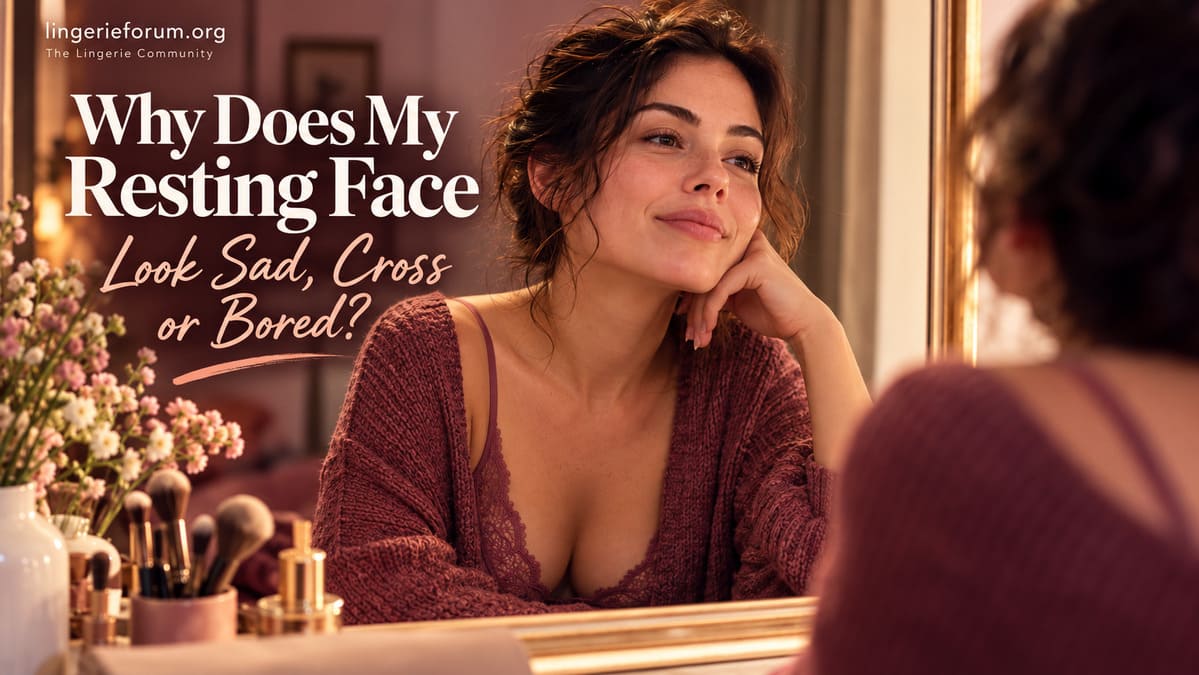
If people regularly ask whether you are all right when you feel perfectly fine, your resting face is being read as a mood. That is not a flaw in your face. It is how human face perception works: we read neutral faces through their resemblance to expressions, and then we turn the expression into a judgement about the person. Your mouth, and especially its corners, does a lot of the work.
Why do people read a neutral face as a mood?
Because the brain's system for reading emotions does not switch off when a face is neutral. Researchers at Princeton ran neutral faces through a computer classifier trained to detect expressions and found that faces people judged negatively tended to resemble disgust or fear, and faces judged threatening resembled anger, while faces judged positively resembled happiness. They concluded that trait impressions are partly an overgeneralization of emotion recognition systems, and that the emotions a face merely resembles could then be misattributed as traits.
A related line of work describes face evaluation as rapid, yet not necessarily accurate. Fast is the point. Correct is not.
What does my mouth have to do with it?
Most of it. Mouth corners that sit a little low at rest resemble part of a sad expression; a straight, closed mouth resembles concentration or disapproval; corners that sit a little high resemble a smile. None of those is an expression, but each borrows one. Other features join in, eyebrows especially, but the mouth is where most people look first for mood.
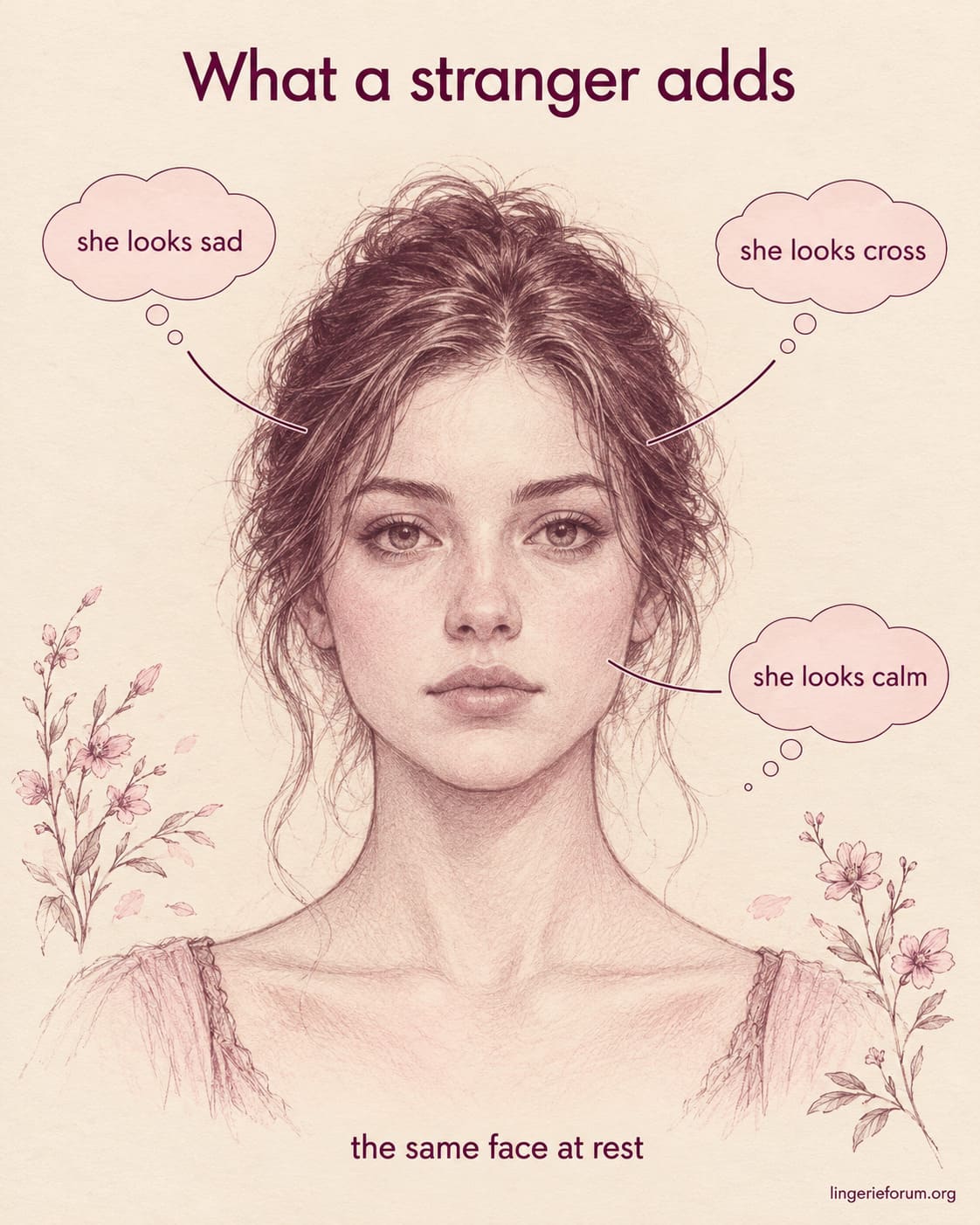
Why does it get more common with age?
Because faces change and perception has not caught up. With age, mouth corner angles decreased in a 3D study of adult lips, so corners sit lower for everyone over time. And perception adds its own bias: one study found that age-related stereotypes and age-related changes in the face may bias the attribution of specific emotions such as sadness to older faces. Another found neutral expressions were perceived as more expressive in old than in young faces. An older face at rest gets read as feeling something, whether or not it does.
Why does my face look different in different photos?
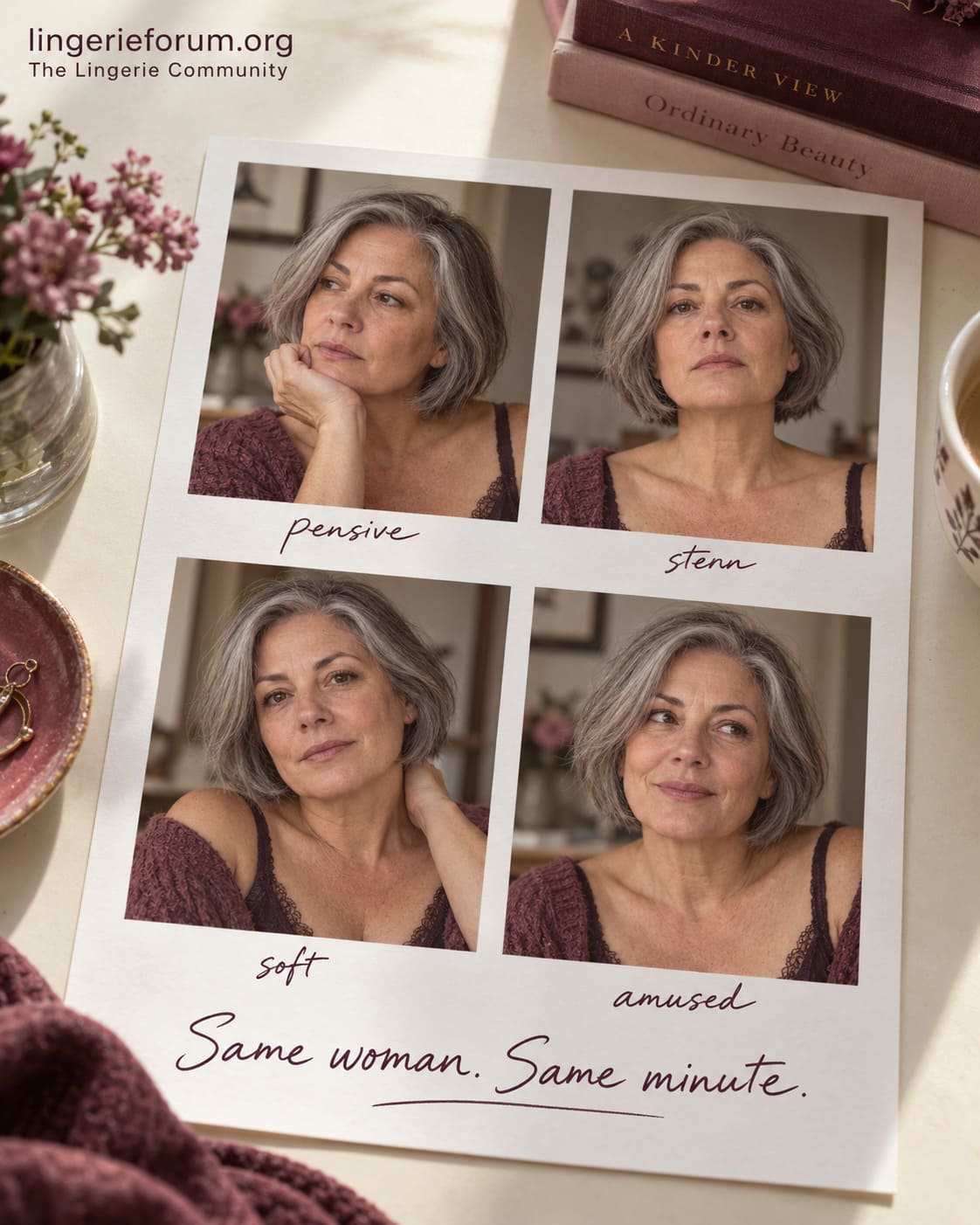
Because impressions are made from images, not from people. A Princeton study found that images of the same individual can lead to different impressions, with within-individual image variance comparable to or exceeding between-individuals variance. In plain terms: two photos of you can differ in how "friendly" or "stern" you look as much as two different people do. Angle, light and the half-second chosen decide it.
Do I need to fix my resting face?
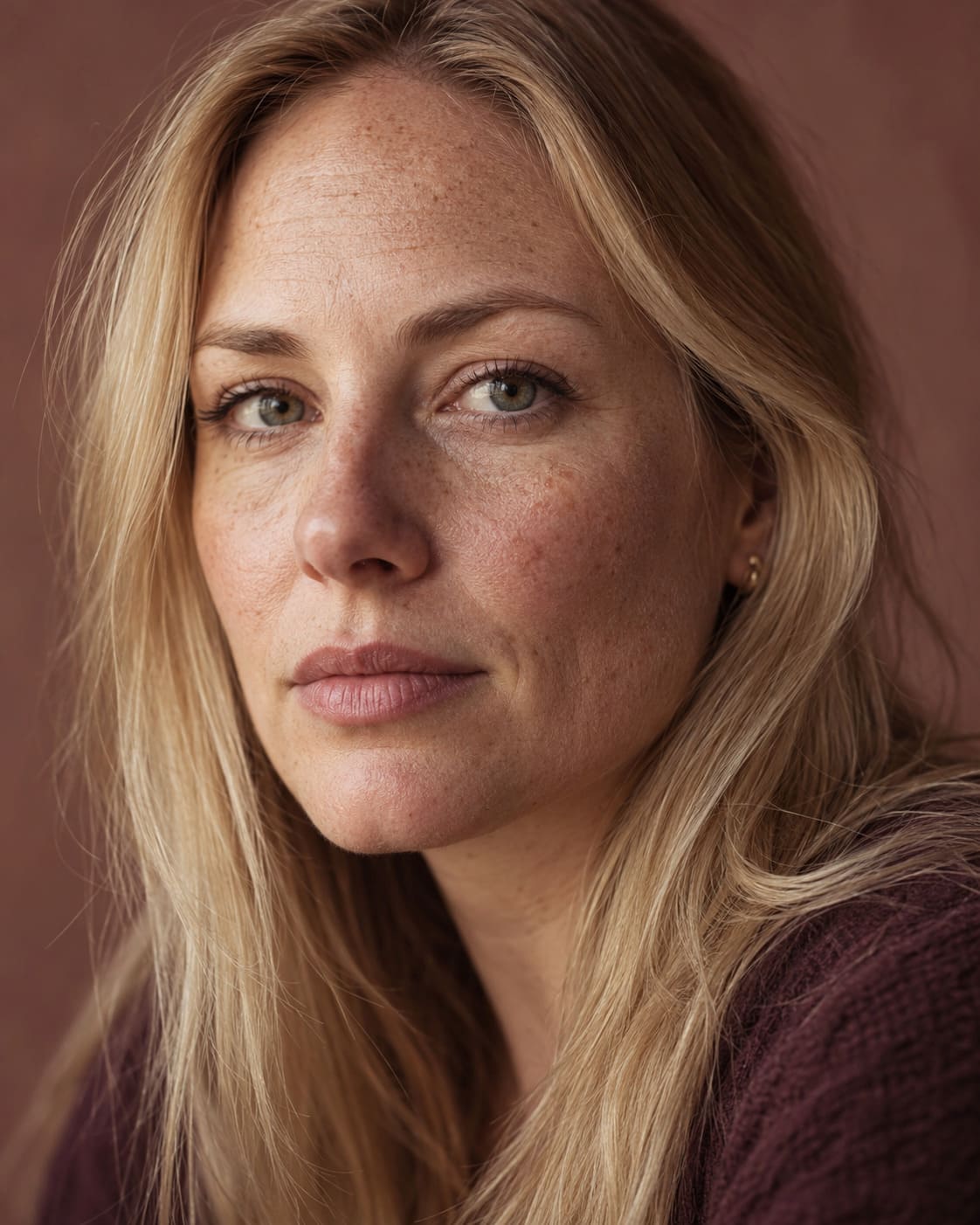
No. There is nothing to fix. Your face at rest is simply your face; a stranger's guess about it is theirs to own.
If you want a particular impression in a particular situation, a job photo or a first meeting, the research above points to what actually changes it: the image and the moment, not your anatomy. Take several photos and pick the one that feels like you. Otherwise, the people who know you will learn that your face at rest means nothing but rest.
Can you tell someone's personality from their face?
Not usefully. A major review concluded that the diagnostic validity of these attributions has been greatly overstated, and a 2022 meta-analysis of trustworthiness judgements found accuracy unlikely to be of practical utility. One more finding explains why the belief survives anyway: in an experiment where impressions were passed along a chain of people, more trustworthy looks were associated with more trustworthy behavior - even when there was no relationship between looks and behavior at the start of the chain. Folk beliefs about faces can create the patterns they claim to find.
The short version
People read neutral faces through the expressions they resemble, and the mouth drives much of it. It happens more as faces age, and it varies from one photo to the next as much as between different people. None of it tells anyone who you are, and none of it is yours to fix.
Sources
All read as abstracts on PubMed.
- Said, Sebe and Todorov 2009, Structural resemblance to emotional expressions predicts evaluation of emotionally neutral faces
- Oosterhof and Todorov 2008, The functional basis of face evaluation
- Yang et al. 2023, Gender- and age-related characterization of lip morphology
- Folster, Hess and Werheid 2014, Facial age affects emotional expression decoding
- Freudenberg et al. 2015, Facial wrinkles affect our processing of emotion in the elderly
- Todorov and Porter 2014, Misleading first impressions
- Todorov et al. 2015, Social attributions from faces
- Foo et al. 2022, Accuracy in facial trustworthiness impressions: a meta-analysis
- Uddenberg et al. 2023, on how face-trait beliefs spread
Comments
Loading comments...