Does Eating Cabbage Make Your Breasts Grow?
No source we could find shows that eating cabbage changes breast size. Breast size is shaped mostly by puberty, genes and body weight, and the only cabbage research on breasts is about soothing sore, full breasts while breastfeeding.
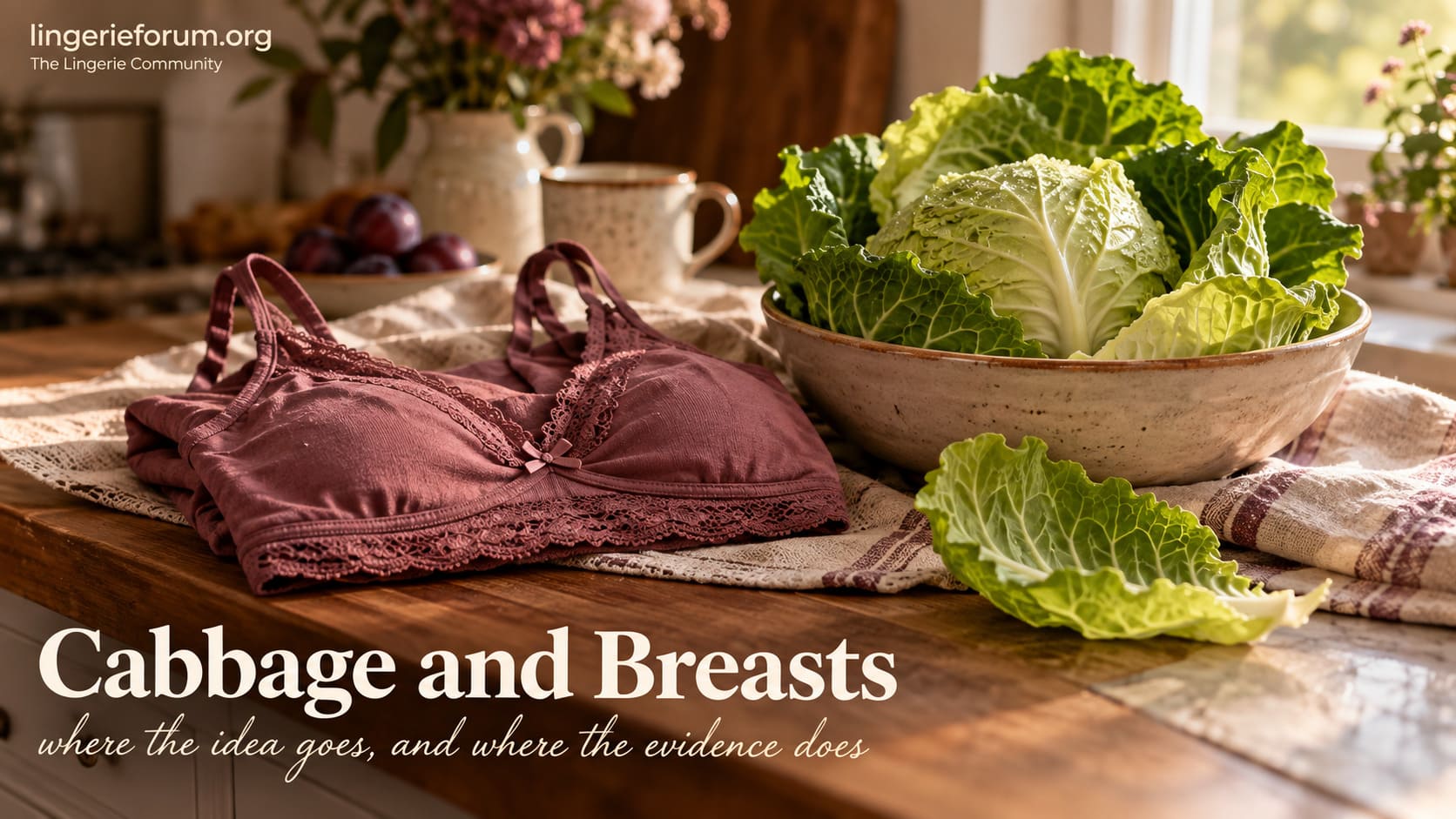
No reliable source we could find shows that eating cabbage makes breasts grow. Breast size is mostly settled by puberty, by the genes you inherited and by body weight, and none of the approved health sources we read mention cabbage as a factor at all. The only real research joining cabbage and breasts is about something else entirely: cold cabbage leaves laid on sore, overfull breasts while breastfeeding.
It is a lovely, hopeful idea, and plenty of people have heard it from a mother, an aunt or a friend at school. Wanting your body to change is not silly, and asking is the sensible thing to do. Here is what the sources actually say.
Where does the cabbage idea come from?
We could not trace the origin of this belief to any source we are able to cite. It is widely repeated, but none of the health pages or studies we read explain where it started, so we will not guess.
What we can say is that cabbage and breasts do meet in one place in the medical literature. A Cochrane review of treatments for breast engorgement, which looked at 21 studies involving 2170 women, includes trials of cabbage leaves placed on the breasts of breastfeeding women whose breasts had become overfull, hard and painful. That is a question about comfort during breastfeeding. It has nothing to do with eating cabbage, and nothing to do with breast size. Whether that use has anything to do with how the size story began is not something any source we read says.
What actually decides how big your breasts are?
Breasts develop during puberty. The NHS page on early or delayed puberty says it is normal for puberty to start any time between the ages of 8 and 14, and lists developing breasts among its signs. A review of breast development in childhood and adolescence describes the changes in the breast from birth to puberty as happening "under hormonal stimulation".
Genes matter a great deal. A study of 1010 female twins estimated that the heritability of bra cup size was 56%. The same study found that about a third of that genetic influence was shared with the genes that influence body mass index, and about two thirds seemed to be specific to breast size. In plain words: breast size tends to run in families, partly through body weight and partly on its own.
Breasts also change across a woman's life. The NHS guide to checking your breasts says breasts may naturally look and feel different at different points in the menstrual cycle, while pregnant or breastfeeding, and after menopause. The same page notes that it is common for breasts to be different sizes from each other.
None of these sources lists any particular food, cabbage included, as something that changes breast size.
Do the sources say cabbage does not work?
No, and it matters to be exact about that. We did not find a single study, in PubMed or on any approved health site, that tested whether eating cabbage changes breast size. So there is no evidence that it works, and there is also no study that tested it and found it fails.
What we can honestly say is this: nothing we read gives a reason to expect it to work, and everything we read about what does shape breast size points to puberty, inherited genes and body weight rather than to any single food.
Cabbage is a perfectly good vegetable to eat because you enjoy it. It just has no evidence behind it as a way to change your bust.
Is it normal for my breasts to be smaller than I hoped, or uneven?
The sources describe a wide range as normal. The NHS breast checking guide says it is common for breasts to be different sizes, and that what matters is getting to know what is normal for you so you can notice changes that are not.
The twin study above suggests that a good part of the difference between one woman's cup size and another's comes from the genes each inherited. That is not something either of them chose, earned or failed at.
If you are still a teenager and worried that development has not started, the NHS puberty page says that if puberty has not started by the age of 15, this could be delayed puberty, and that a GP can check. It adds that it is usually nothing to worry about.
When should I see a doctor?
The NHS breast checking guide says to see a GP if you have:
- a lump or swelling in your breast, chest or armpit
- any changes in your breasts, chest or nipples that are not normal for you
- pain in your breast or armpit that does not go away
For younger readers, the NHS puberty page suggests seeing a GP if you think you or your child may have early or delayed puberty.
The short version
No source we could find shows that eating cabbage makes breasts grow, and we could not trace where the belief started. According to the sources, breasts develop at puberty under hormonal influence, and their size is strongly shaped by inherited genes and partly by body weight. The only cabbage research on breasts is about cold leaves soothing overfull breasts during breastfeeding, and even there the evidence is low certainty. Eat cabbage if you like it, and treat your breasts, whatever their size, as normal for you.
Sources
- NHS, Early or delayed puberty - puberty usually starts between 8 and 14, breast development as a sign, when to see a GP.
- NHS, How to check your breasts or chest - breasts commonly differ in size, change with the cycle, pregnancy, breastfeeding and menopause, when to see a GP.
- Wade TD et al. 2010, Body mass index and breast size in women: same or different genes? (PubMed) - heritability of cup size estimated at 56% in 1010 female twins, a third shared with BMI genes.
- Boldrini C et al. 2025, From birth to puberty: the main physio-pathological changes of the mammary gland (PubMed) - breast changes from birth to puberty occur under hormonal stimulation.
- Zakarija-Grkovic I, Stewart F 2020, Cochrane review: Treatments for breast engorgement during lactation (PubMed) - cabbage leaves studied for engorgement during breastfeeding, low or very low certainty evidence.
This article describes what those sources say. It is not medical advice, and it is not a substitute for a doctor, nurse or pharmacist.
Comments
Loading comments...